Spiral and coiled shells — whelks, conchs, olives, murex, cones and more. The classic beachcomber finds.
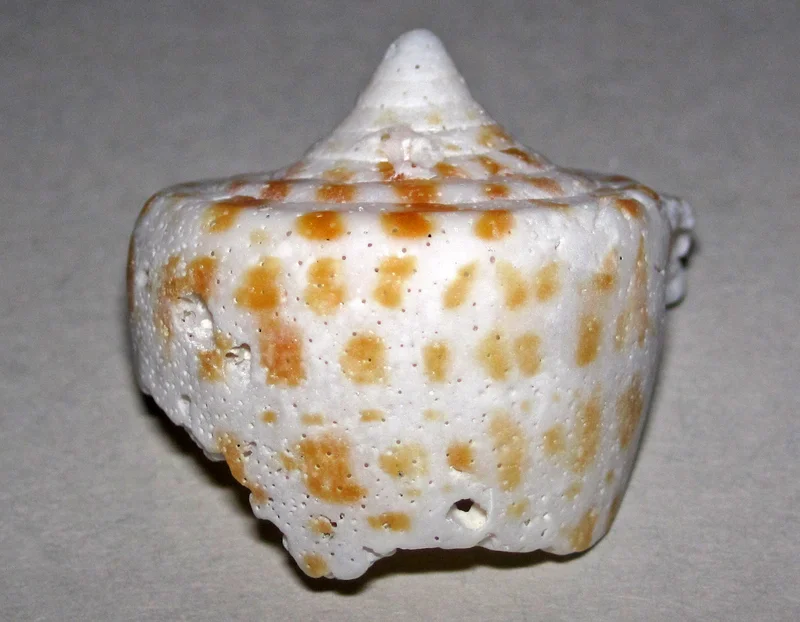
Alphabet Cone
Conus spurius · Conidae
★★★ Uncommon 📏 1.5–3"
Cream-white with irregular orange-brown spots resembling letters. Cone-shaped.
🏝️ Sandy Gulf bottom🍽️ Marine worms⏳ 5–10 years📍 Marco Island, Bonita Beach
🔍 Collecting tip: Look in the swash zone at low tide.
💡 Never handle live cone snails — they can sting painfully!
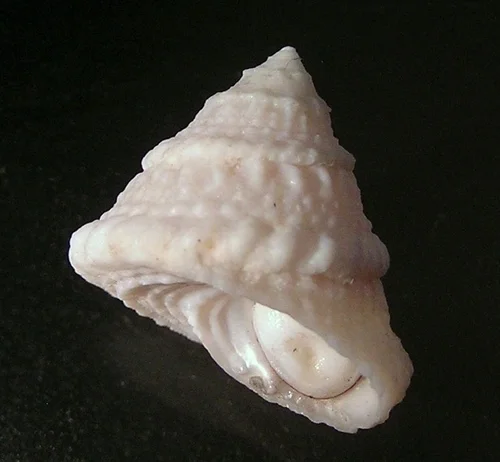
American Star Shell
Lithopoma americanum · Turbinidae
★★★ Uncommon 📏 1–2"
Thick, solid shell with a flattened base and conical spire. Cream to tan with pearly interior visible when worn.
🏝️ Rocky areas, coral rubble, moderate depths🍽️ Algae (grazer)⏳ 5–8 years📍 Rubble zones, Marco Island & Naples
🔍 Collecting tip: Look for the round operculum nearby even if the shell itself isn't visible.
💡 Turban shells like this one have a thick calcareous operculum, sometimes called a "cat's eye," often found separately from the shell.
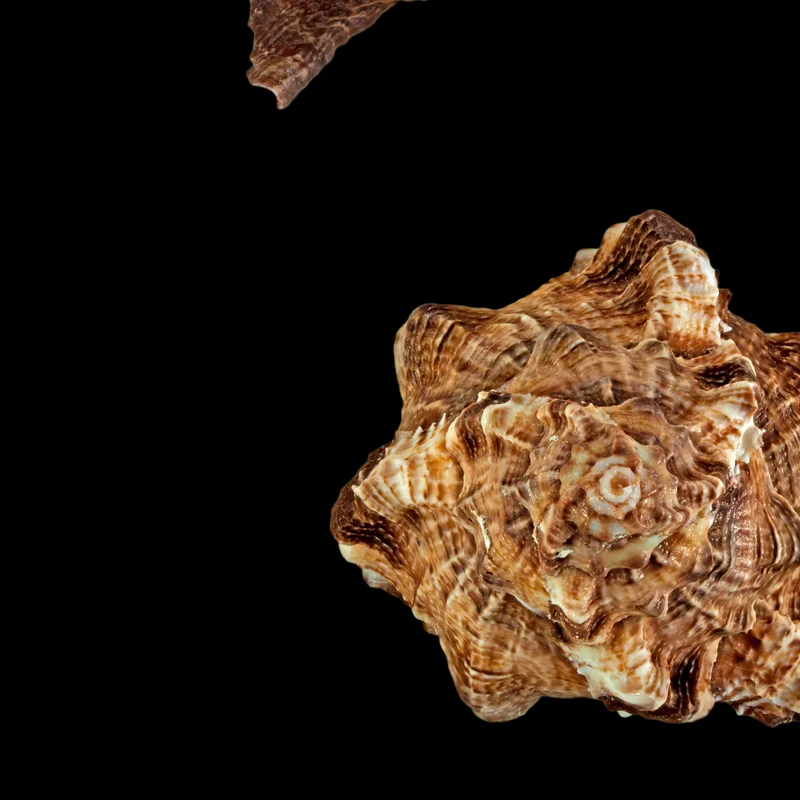
Apple Murex
Phyllonotus pomum · Muricidae
★★★ Common 📏 1.5-3"
Spiraled gastropod with apple-round shape.
🏝️ Sandy to rocky bottom🍽️ Other mollusks⏳ 8-10 years📍 Gulf beaches
🔍 Collecting tip: Look for round, apple-like shape.
💡 Named for the apple-like shape.
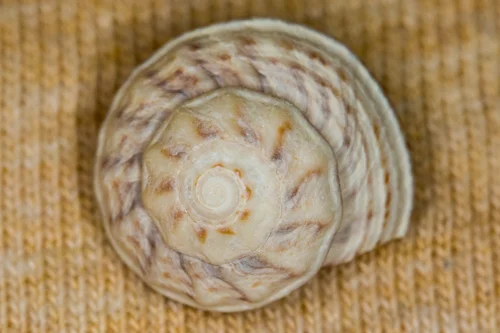
Atlantic Modulus
Modulus modulus · Modulidae
★★★ Very Common 📏 0.3–0.5"
Small, sturdy, top-shaped shell with a prominent peripheral tooth. Gray to brownish. Heavily beaded sculpture.
🏝️ Seagrass beds, shallow lagoons, mudflats🍽️ Algae and detritus (grazer)⏳ 1–2 years📍 Seagrass flats, all Gulf-side bays
🔍 Collecting tip: Sift through seagrass wrack rather than open sand.
💡 Despite being one of the most abundant snails in Gulf seagrass beds, its tiny size means most beachcombers walk right past it.

Atlantic Yellow Cowrie
Erosaria acicularis · Cypraeidae
★★★ Rare 📏 0.5–1"
Small, polished, egg-shaped shell. Tan to yellow-brown with tiny darker spots. Smooth, glossy surface.
🏝️ Under rocks, coral rubble, moderate depths🍽️ Algae and small encrusting invertebrates⏳ 3–4 years📍 Rubble zones, Sanibel & Captiva
🔍 Collecting tip: A true rarity this far north in the Gulf — check under rubble at the lowest tides.
💡 In life the mantle folds up and completely covers the shell, which is what keeps a cowrie's surface so polished.
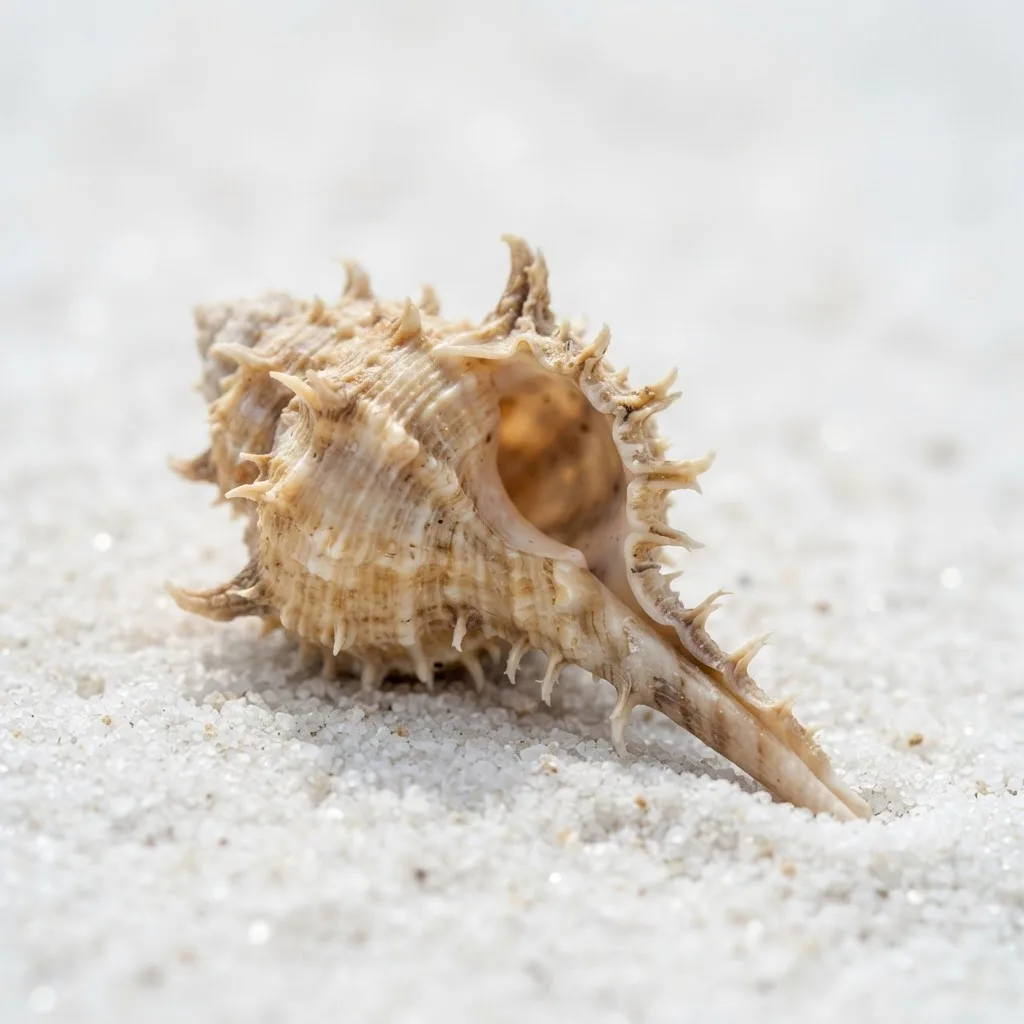
Ball Murex
Haustellum recurvirostris · Muricidae
★★★ Uncommon 📏 1–2"
Compact, rounded murex with short, recurved spines and a long, thin siphonal canal. Tan to cream. More compact body than other murex species.
🏝️ Sandy bottoms, moderate depths🍽️ Other mollusks and barnacles⏳ 3–5 years📍 Sandy bottoms offshore, Gulf side
🔍 Collecting tip: Check shell-hash drift rather than open sand.
💡 Its long, thin, recurved siphonal canal stands out sharply against its otherwise compact, rounded body — an unusual combination among murex shells.

Banded Tulip
Cinctura lilium · Fasciolariidae
★★★ Common 📏 2–4"
Smooth grayish shell with fine brown spiral banding. More slender than True Tulip.
🏝️ Sandy Gulf bottom🍽️ Bivalves & worms⏳ 8–12 years📍 Marco Island, Naples
🔍 Collecting tip: Often found in pairs.
💡 Smaller and more common than the True Tulip.

Barbados Keyhole Limpet
Fissurella barbadensis · Fissurellidae
★★★ Common 📏 0.5–1"
Small keyhole limpet with greenish-gray coloring and radiating white ribs. Interior is white with green margin.
🏝️ Rocks, coral rubble, intertidal🍽️ Algae⏳ 2–3 years📍 Splash-zone rocks, Naples & Bonita Beach
🔍 Collecting tip: Check rocks right at the waterline where waves splash but rarely submerge.
💡 The green-margined interior is a quick way to distinguish it from the similar Cayenne Keyhole Limpet.

Beaded Periwinkle
Cenchritis muricatus · Littorinidae
★★★ Common 📏 0.3–0.5"
Tiny, thick shell with beaded spiral sculpture. Gray to whitish. Found in clusters on rocks in the highest intertidal and splash zone.
🏝️ Rocky splash zone, above waterline on rocks and seawalls🍽️ Algae and lichen (grazer)⏳ 2–4 years📍 Seawalls and rocks, Naples & Bonita Beach
🔍 Collecting tip: Check the driest, highest rocks — well above where waves are actively breaking.
💡 Extremely tolerant of drying out, often found clustered in the highest splash zone where waves rarely reach.

Bleeding Tooth (Variant)
Nerita peloronta (pale form) · Neritidae
★★★ Common 📏 0.5–1"
Pale variant of the Bleeding Tooth Nerite with lighter cream-yellow base color but still showing the distinctive blood-red staining around the toothed aperture.
🏝️ Rocky intertidal, splash zone🍽️ Algae (grazer)⏳ 3–5 years📍 Rocky splash zone, Naples & Sanibel jetties
🔍 Collecting tip: Look for the telltale blood-red staining near the aperture, even on paler individuals.
💡 The red staining around the tooth-like aperture folds is thought to help this species blend into red algae and coralline growth on the rocks it lives on.
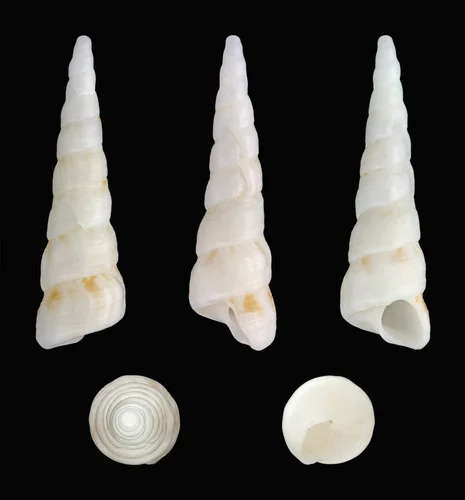
Boring Turret Shell
Turritella acropora · Turritellidae
★★★ Common 📏 0.5–1.5"
Elongated spiral similar to Eastern Turritella but smaller and with finer sculpture. Tan to gray. Often found in shell hash.
🏝️ Sandy-mud bottoms, shallow to moderate depths🍽️ Plankton and detritus⏳ 2–4 years📍 Sandy-mud flats, all Gulf bays
🔍 Collecting tip: Sift through fine shell hash rather than searching visually.
💡 A smaller, finer-sculptured cousin of the Eastern Turritella, often mixed in with shell hash.
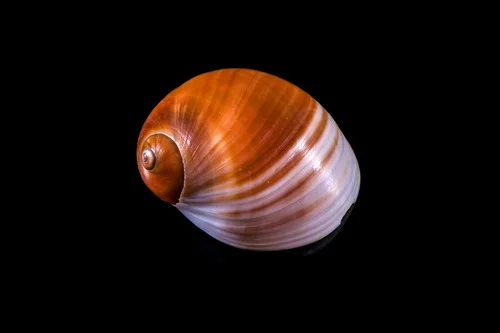
Brown Moon Snail
Polinices hepaticus · Naticidae
★★★ Common 📏 1–2"
Globular shell, dark brown to chestnut. Smooth and polished. Callus partially covers umbilicus. Darker than Shark Eye.
🏝️ Sandy bottoms, shallow to moderate depths🍽️ Clams and other bivalves (drills a neat beveled hole)⏳ 3–5 years📍 Sandy Gulf flats, all SW Florida beaches
🔍 Collecting tip: Look for its telltale drilled holes in nearby clam and cockle shells.
💡 Darker overall than its cousin the Shark Eye, and its umbilicus is partially covered by a callus rather than fully open.
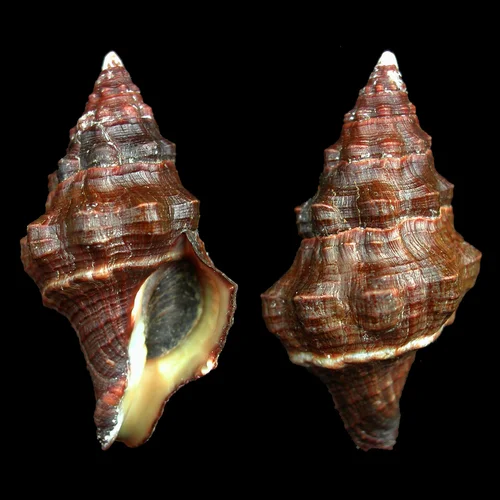
Brown-Banded Latirus
Leucozonia nassa · Fasciolariidae
★★★ Uncommon 📏 1–2"
Sturdy, dark brown shell with knobbed axial ribs and a prominent basal ridge. Interior white. Similar to a small tulip shell but darker.
🏝️ Rocky areas, moderate depths🍽️ Other mollusks and worms⏳ 4–6 years📍 Rocky bottoms, Sanibel & Marco Island offshore
🔍 Collecting tip: Check rocky rubble the same way you would for tulip shells.
💡 A close relative of the True and Banded Tulip shells, but smaller, darker, and more heavily sculptured.
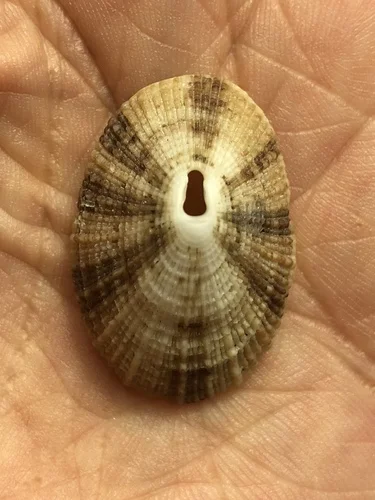
Cayenne Keyhole Limpet
Diodora cayenensis · Fissurellidae
★★★ Common 📏 0.5–1.5"
Cap-shaped shell with a distinctive oval hole at the apex (keyhole). Gray to white with fine radiating ribs.
🏝️ Rocks, hard substrates, intertidal to shallow subtidal🍽️ Algae (grazer)⏳ 2–4 years📍 Jetty rocks, Sanibel Causeway & Naples Pier
🔍 Collecting tip: Check the undersides of loose rocks in the lower intertidal.
💡 The keyhole at the apex isn't decorative — it's used to expel waste and water pumped past the gills.
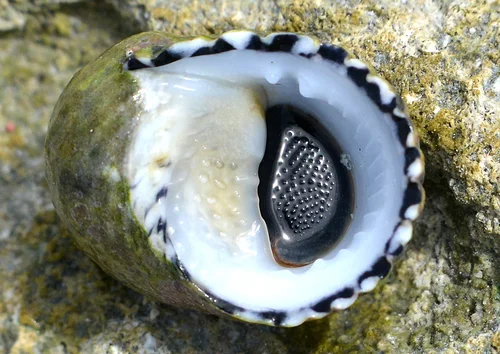
Checkered Nerite
Nerita tessellata · Neritidae
★★★ Common 📏 0.3–0.5"
Small, rounded shell with black and white checkered pattern. Found on rocks in the splash zone. Gregarious — usually found in groups.
🏝️ Rocky intertidal, seawalls, limestone shoreline🍽️ Algae (grazer)⏳ 2–4 years📍 Rocky splash zone, Sanibel Causeway & Naples seawalls
🔍 Collecting tip: Check clusters on rocks right at the waterline.
💡 Nerites are gregarious and are usually found clustered together in groups rather than singly.
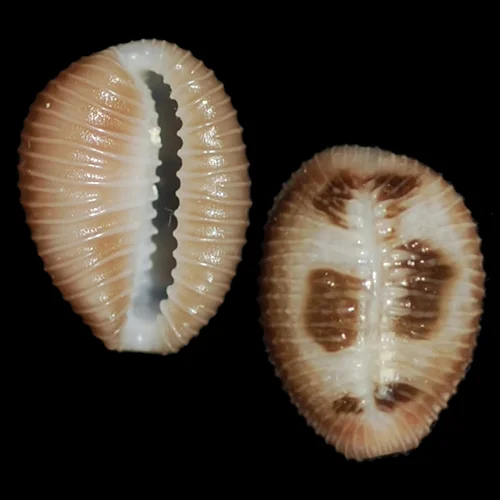
Coffee Bean Trivia
Pusula pediculus · Triviidae
★★★ Common 📏 0.2–0.4"
Tiny, coffee-bean-shaped shell with fine transverse ribs running across the dorsum. Brown to reddish-brown.
🏝️ Under rocks, on colonial tunicates, shallow to moderate depths🍽️ Colonial tunicates (sea squirts)⏳ 1–2 years📍 Under rocks, Sanibel & Naples
🔍 Collecting tip: Flip small rocks and look closely — these are tiny and easy to miss.
💡 Named for its resemblance to a coffee bean, right down to the central ridge.

Common Nutmeg
Cancellaria reticulata · Cancellariidae
★★★ Uncommon 📏 1–2"
Sturdy, oval shell with strong cancellate (cross-hatched) sculpture. Cream to tan with brown spiral bands. Named for resemblance to a nutmeg.
🏝️ Sandy bottoms, moderate to deep water drift🍽️ Marine worms⏳ 3–5 years📍 Offshore drift, Gulf side
🔍 Collecting tip: Check shell-hash piles after dredging or major storms rather than open sand.
💡 The strong cross-hatched sculpture and rounded shape genuinely resemble a nutmeg seed, which is exactly where the common name comes from.
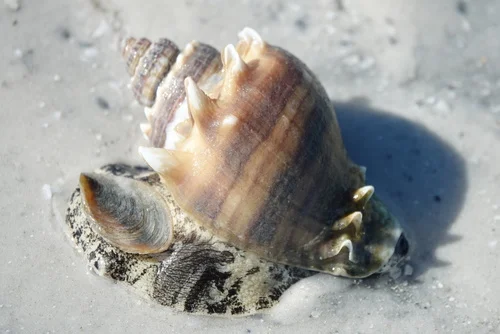
Crown Conch
Melongena corona · Melongenidae
★★★ Common 📏 1-4"
Dark gray to brown with one or more rows of hollow spines.
🏝️ Mangrove mud flats & oyster bars🍽️ Oysters⏳ 3-5 years📍 Marco Island
🔍 Collecting tip: Check mangrove edges at low tide.
💡 Named for the spiky crown of spines.

Eastern Turritella
Turritella exoleta · Turritellidae
★★★ Common 📏 1–2.5"
Very elongated, many-whorled spiral shell with prominent spiral ridges. Tan to brown. Like a stretched-out screw.
🏝️ Sandy-mud bottoms, moderate depths🍽️ Plankton and detritus (filter feeder)⏳ 3–5 years📍 Sandy-mud flats, Gulf-side bays
🔍 Collecting tip: Check muddy sand patches at low tide alongside other turret shells.
💡 Unlike true augers, its sculpture runs in spiral ridges rather than axial ribs — a good way to tell the two "screw shells" apart.
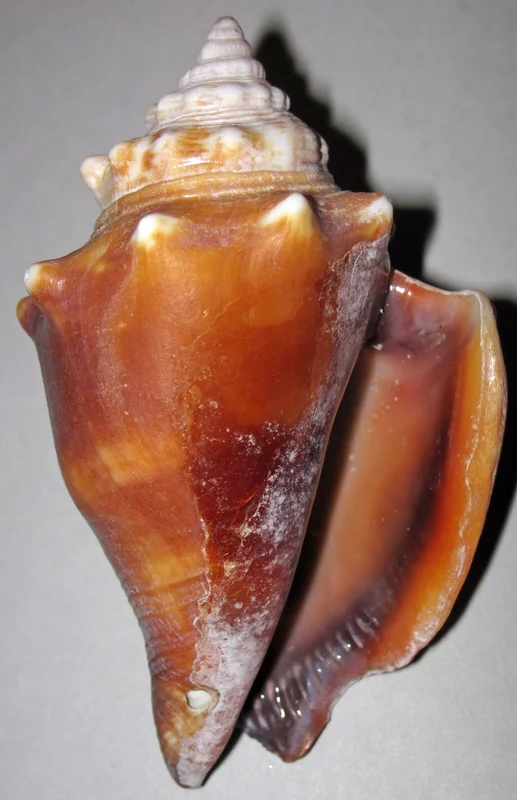
Fighting Conch
Strombus alatus · Strombidae
★★★ Common 📏 2–4"
A solid, heavy shell with a flared lip and knobby spire. Orange-brown exterior with a glossy orange interior.
🏝️ Shallow seagrass beds🍽️ Algae & detritus⏳ 5–7 years📍 Marco Island, Sanibel
🔍 Collecting tip: Wade in shallow seagrass at low tide.
💡 Uses its foot-like operculum to flip itself upright.
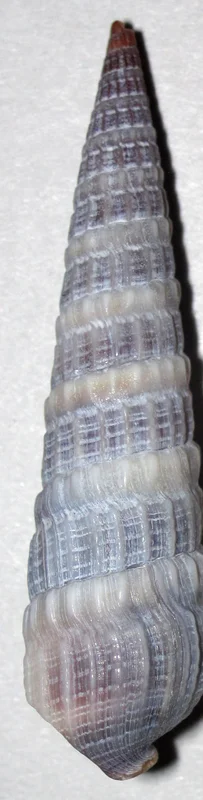
Florida Auger
Terebra dislocata · Terebridae
★★★ Common 📏 2–3"
A long, narrow, tightly wound spiral shell. Grayish-white with faint brownish spiral bands.
🏝️ Sandy intertidal zones🍽️ Marine worms⏳ 3–5 years📍 Sanibel, Fort Myers Beach
🔍 Collecting tip: Look in the wet sand along the water's edge.
💡 Spirals into sand like a screw to chase worms.
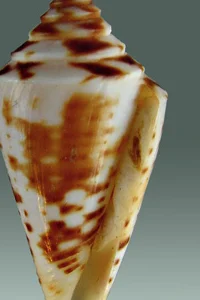
Florida Cone
Conus floridanus · Conidae
★★★ Uncommon 📏 1-2"
Cone-shaped shell with smooth surface. Tan with brown markings.
🏝️ Sandy bottom🍽️ Marine worms⏳ 5-10 years📍 Gulf beaches
🔍 Collecting tip: Smaller than Alphabet Cone.
💡 Smaller version of the Crown Cone.
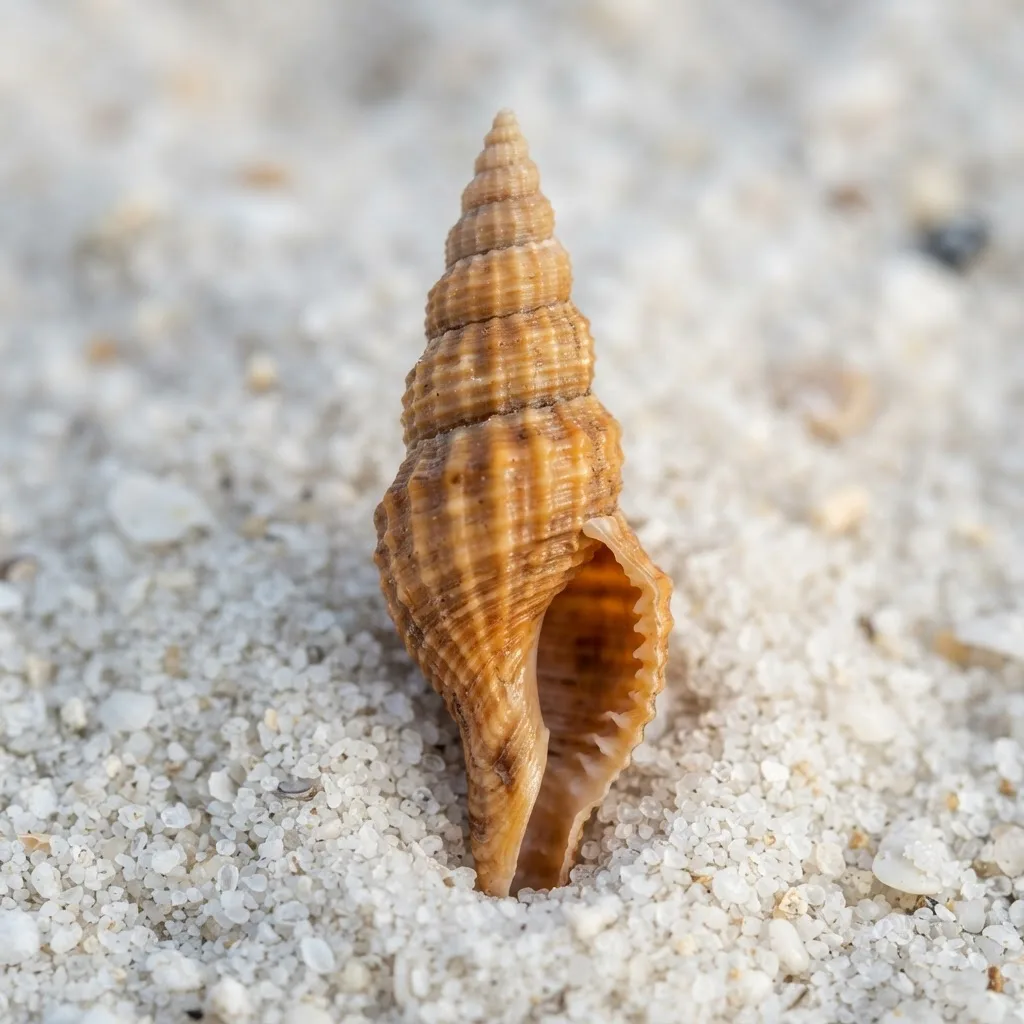
Florida Miter
Subcancilla joycei · Mitridae
★★★ Rare 📏 1–2"
Elongated, spindle-shaped shell with axial ribs and columellar folds. Tan to orange-brown. Miters are uncommon in SW Florida.
🏝️ Sandy bottoms near coral rubble, moderate depths🍽️ Marine worms⏳ 3–5 years📍 Sandy rubble patches, Sanibel offshore
🔍 Collecting tip: A genuine rare find — check rubble-rich sand after big storms.
💡 Miters use a proboscis to probe sand for burrowing worms, similar in hunting style to some cone snails.
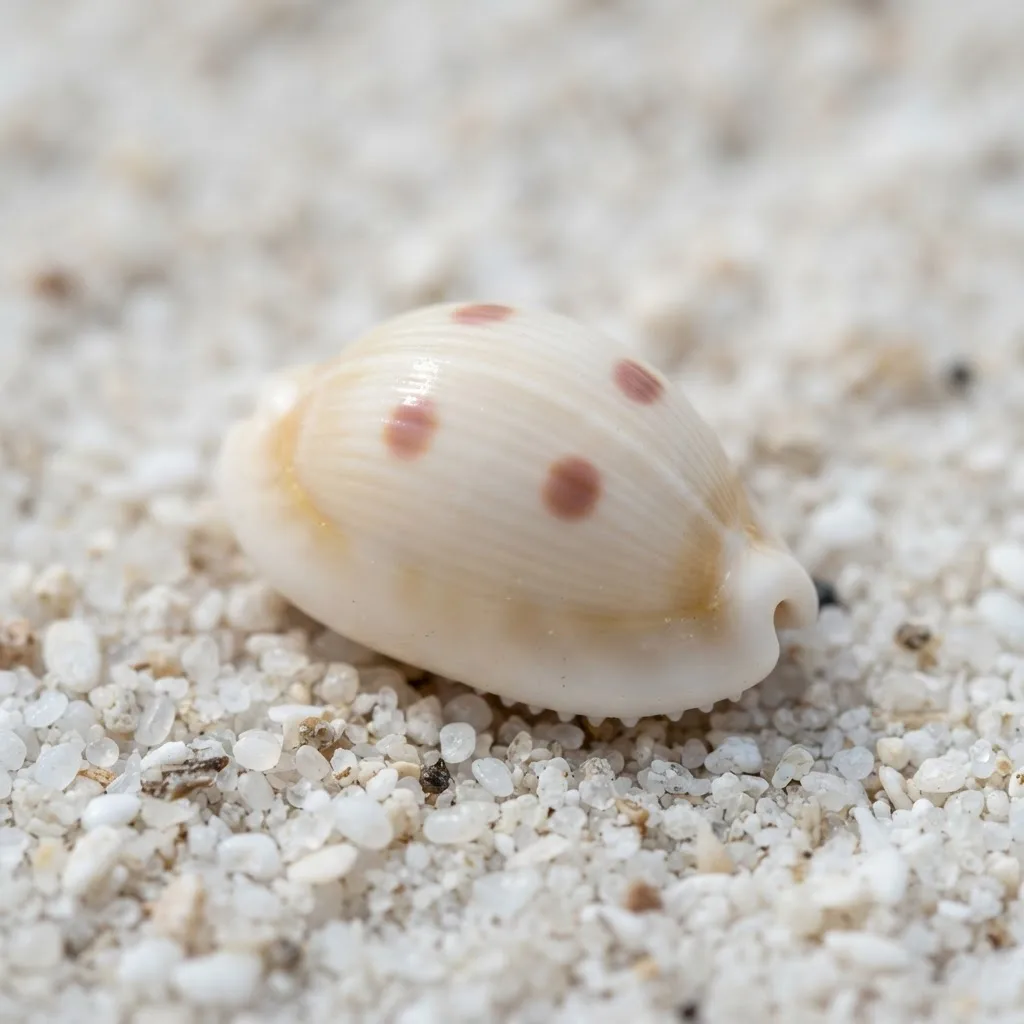
Four-Spotted Trivia
Pusula quadripunctata · Triviidae
★★★ Uncommon 📏 0.2–0.3"
Tiny shell similar to Coffee Bean Trivia but with four pinkish-brown spots on the dorsum. Fine transverse ribs.
🏝️ Under rocks, on colonial organisms, shallow waters🍽️ Colonial tunicates⏳ 1–2 years📍 Under rocks, same habitat as Coffee Bean Trivia
🔍 Collecting tip: Use a magnifier — at this size the spots are easy to miss.
💡 The four pinkish-brown dorsal spots are the easiest way to separate it from the plainer Coffee Bean Trivia.
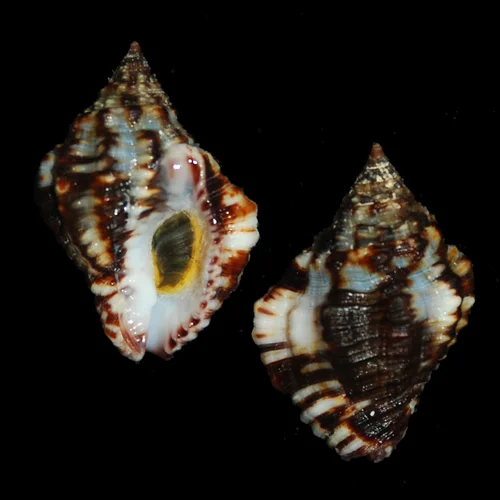
Gaudy Cantharus
Gemophos auritulus · Buccinidae
★★★ Common 📏 0.5–1"
Small, stout shell with strong axial ribs crossed by spiral cords creating a nodulose surface. Dark brown to orange-brown.
🏝️ Rocky areas, coral rubble, shallow waters🍽️ Small invertebrates and carrion⏳ 3–5 years📍 Jetty rubble, Sanibel & Naples piers
🔍 Collecting tip: Flip over loose rubble and coral fragments at low tide.
💡 Its nodulose crisscross sculpture comes from strong ribs crossing spiral cords, giving it a beaded texture.

Giant Atlantic Pyram
Pyramidella dolabrata · Pyramidellidae
★★★ Common 📏 0.5–1"
Small, white, smooth, high-spired shell with flat-sided whorls. Glossy white. Three columellar folds visible in aperture.
🏝️ Sandy bottoms, shallow waters🍽️ Body fluids of polychaete worms (ectoparasite)⏳ 1–2 years📍 Fine sand, all Gulf beaches
🔍 Collecting tip: Sift fine shell drift with a sieve — it's easy to miss by eye alone.
💡 Rather than grazing or hunting, it pierces its worm host with a needle-like stylet and feeds on body fluids — true parasitism in miniature.
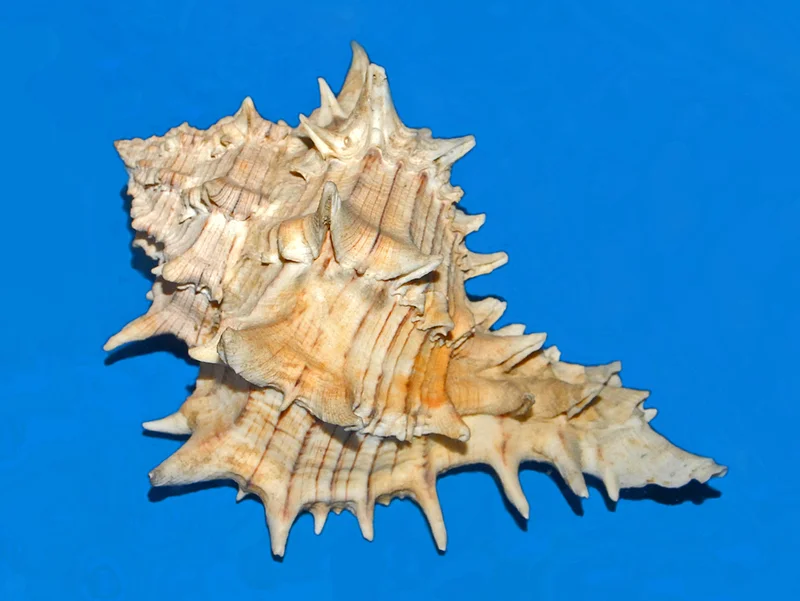
Giant Eastern Murex
Hexaplex fulvescens · Muricidae
★★★ Uncommon 📏 3-5"
Large spiraled shell with prominent ribs.
🏝️ Rocky reefs🍽️ Other mollusks⏳ 10-12 years📍 Gulf beaches
🔍 Collecting tip: Larger murex species.
💡 One of the larger murex shells.
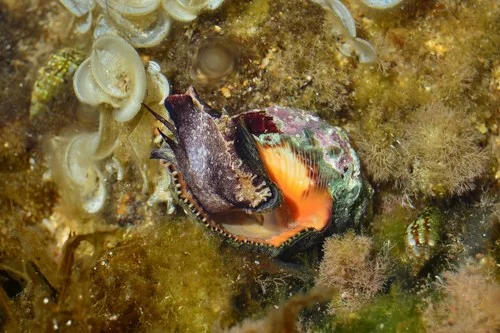
Gulf Oyster Drill
Stramonita haemastoma · Muricidae
★★★ Common 📏 1–3"
Sturdy, rough-textured shell with spiral ridges. Gray to brown, sometimes with orange-brown bands. Interior often salmon-orange.
🏝️ Oyster reefs, rocky areas, pilings, intertidal🍽️ Oysters and barnacles (drills a hole through the shell)⏳ 3–5 years📍 Oyster bars, Naples Bay, Estero Bay, Ten Thousand Islands
🔍 Collecting tip: Check exposed oyster reefs at low tide for shells with small round drill holes.
💡 One of the Gulf Coast's most significant oyster predators — oyster farmers actively remove it from beds.
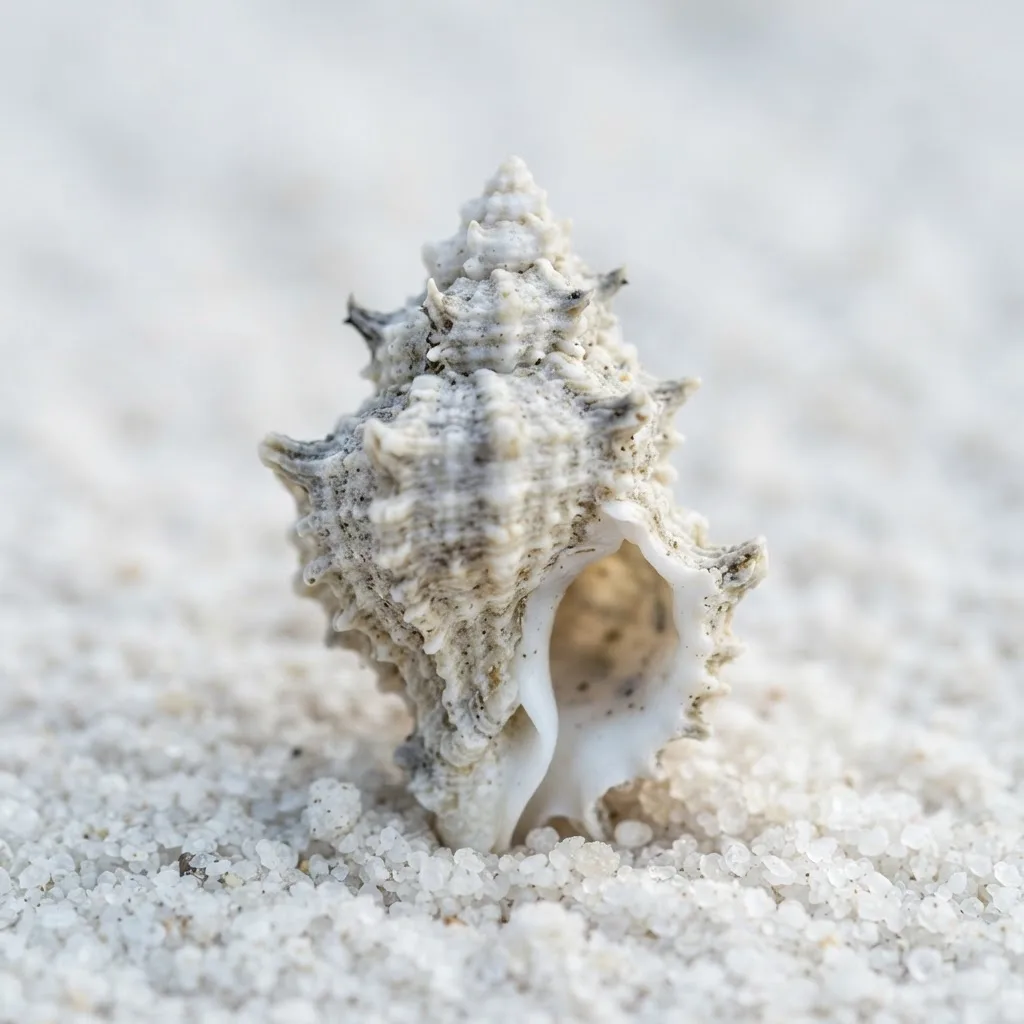
Hexagonal Murex
Muricopsis oxytatus · Muricidae
★★★ Uncommon 📏 0.5–1.5"
Small murex with six prominent varices creating a hexagonal cross-section. White to gray. Strong axial and spiral sculpture.
🏝️ Rocky bottoms, rubble areas, shallow to moderate depths🍽️ Small mollusks and barnacles⏳ 2–4 years📍 Rubble bottoms offshore, Marco Island
🔍 Collecting tip: Best found in dredged or storm-tossed rubble rather than dry beach sand.
💡 Its six varices create a distinct hexagonal cross-section when viewed end-on — a quick way to tell it apart from other small murex.
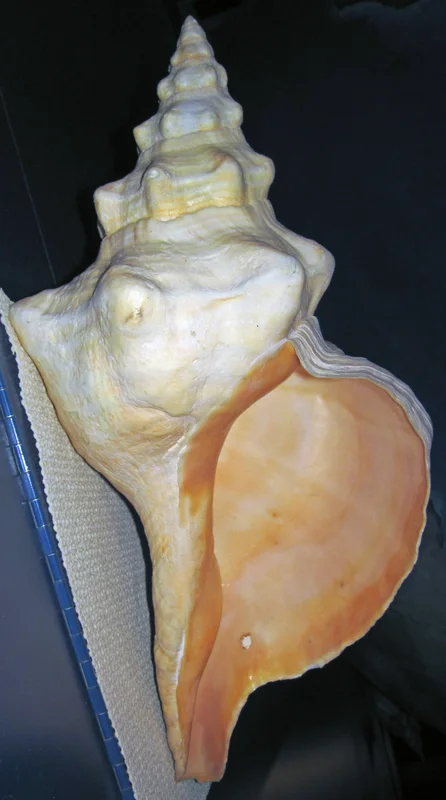
Horse Conch
Triplofusus giganteus · Fasciolariidae
★★★ Uncommon 📏 12–24"
Massive orange-brown shell that can exceed 2 feet. The living animal is brilliant orange.
🏝️ Shallow sandy bottoms🍽️ Other mollusks including whelks⏳ 20+ years📍 Sanibel, Captiva, Naples
🔍 Collecting tip: Hunt the deeper water just past the wave break.
💡 Largest gastropod in North America.
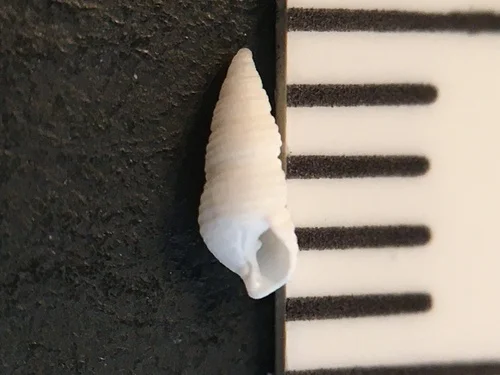
Impressed Odostome
Boonea impressa · Pyramidellidae
★★★ Common 📏 0.1–0.3"
Extremely tiny, white, smooth shell with impressed sutures. Ectoparasite on oysters and other bivalves.
🏝️ On oyster reefs, parasitic on bivalves🍽️ Body fluids of oysters and other bivalves (ectoparasite)⏳ Under 1 year📍 Oyster reefs, Naples Bay & Estero Bay
🔍 Collecting tip: Check the surface of live oyster clusters rather than beach sand.
💡 One of the smallest shells in this guide — a magnifying glass is basically required to appreciate its detail.
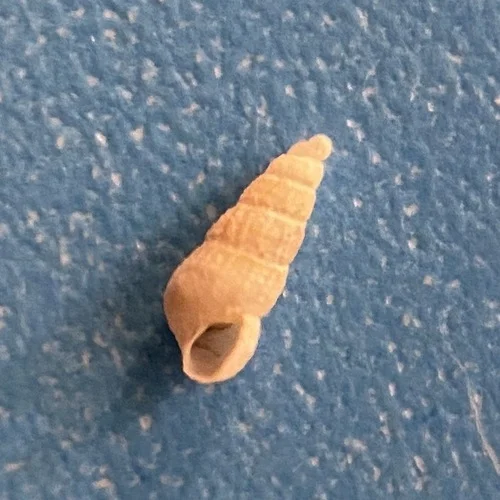
Interrupted Turbonilla
Turbonilla interrupta · Pyramidellidae
★★★ Common 📏 0.2–0.5"
Tiny, elongated white shell with axial ribs. Very narrow and pointed. Requires magnification to appreciate detail.
🏝️ Sandy bottoms, shallow waters🍽️ Body fluids of worms and bivalves (ectoparasite)⏳ Under 1–2 years📍 Fine sand drift, all Gulf beaches
🔍 Collecting tip: Best found by sifting sand through a fine sieve rather than searching by eye.
💡 One of dozens of similar turbonilla species in Gulf waters, most distinguishable only with a hand lens or microscope.
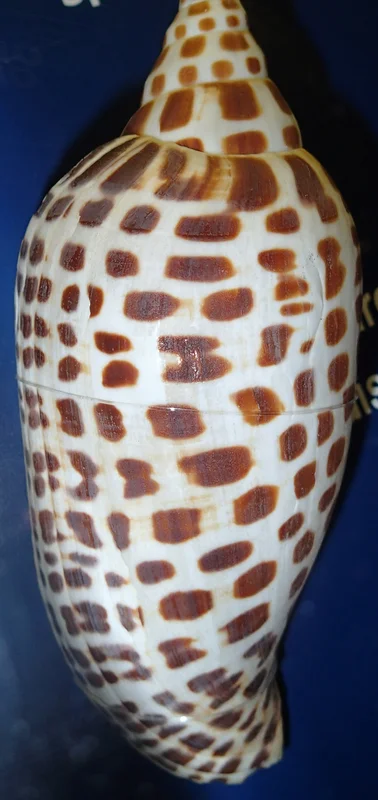
Junonia
Scaphella junonia · Volutidae
★★★ Rare 📏 3–5"
Creamy white with rows of neat square brown spots. Smooth, elongated and elegant.
🏝️ Deep Gulf water 60–300 ft🍽️ Marine worms⏳ Unknown📍 Sanibel Island (rare)
🔍 Collecting tip: Walk the beach at first light after a major storm.
💡 The holy grail of Sanibel shelling.
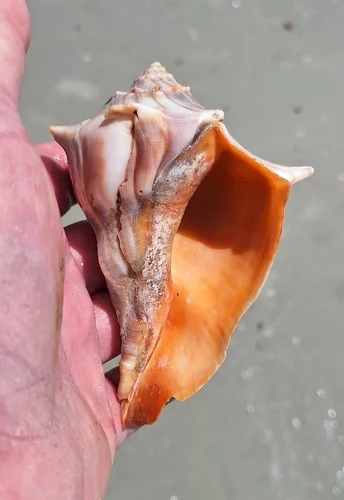
Kiener's Whelk
Busycon carica eliceans · Busyconidae
★★★ Uncommon 📏 4–7"
Subspecies of Knobbed Whelk found in Gulf waters. Knobs may be less pronounced. Gray-brown to tan.
🏝️ Sandy bottoms, shallow to moderate depths🍽️ Clams and oysters⏳ 10–12 years📍 Sandy Gulf beaches, Marco Island & Naples
🔍 Collecting tip: Compare shoulder knobs closely against a Knobbed Whelk to tell the two apart.
💡 A Gulf-water subspecies of the Knobbed Whelk, distinguished mainly by geography and subtler shoulder knobs.
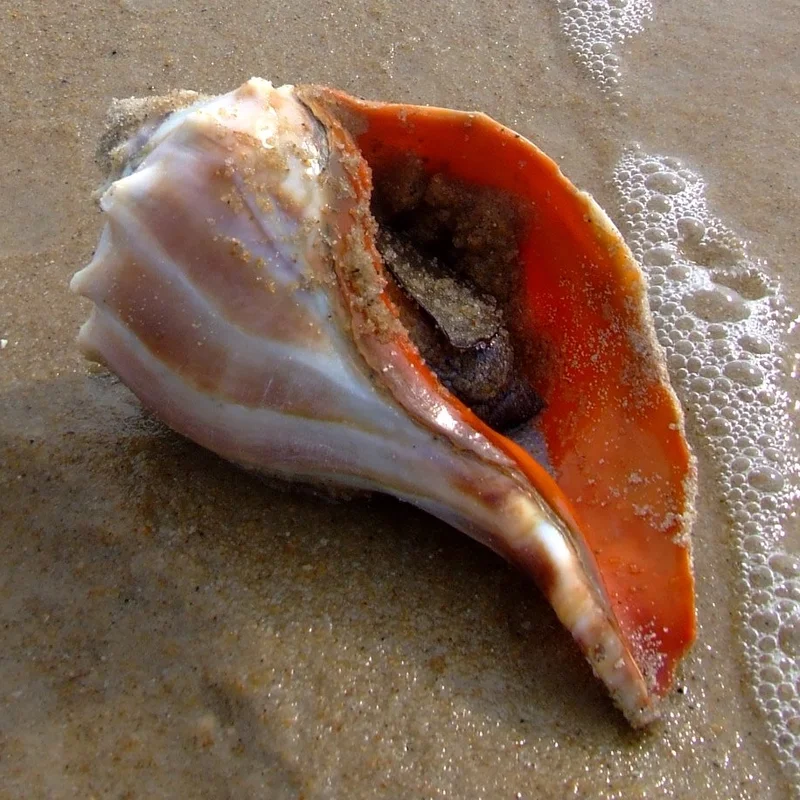
Knobbed Whelk
Busycon carica · Busyconidae
★★★ Common 📏 5-13"
Large shell with distinctive knob-like protrusions on the shoulders.
🏝️ Sandy bottom & mud flats🍽️ Clams, oysters⏳ 10-15 years📍 All SW Florida beaches
🔍 Collecting tip: Compare spirals with Lightning Whelk.
💡 Spirals right-handed, opposite of the Lightning Whelk.
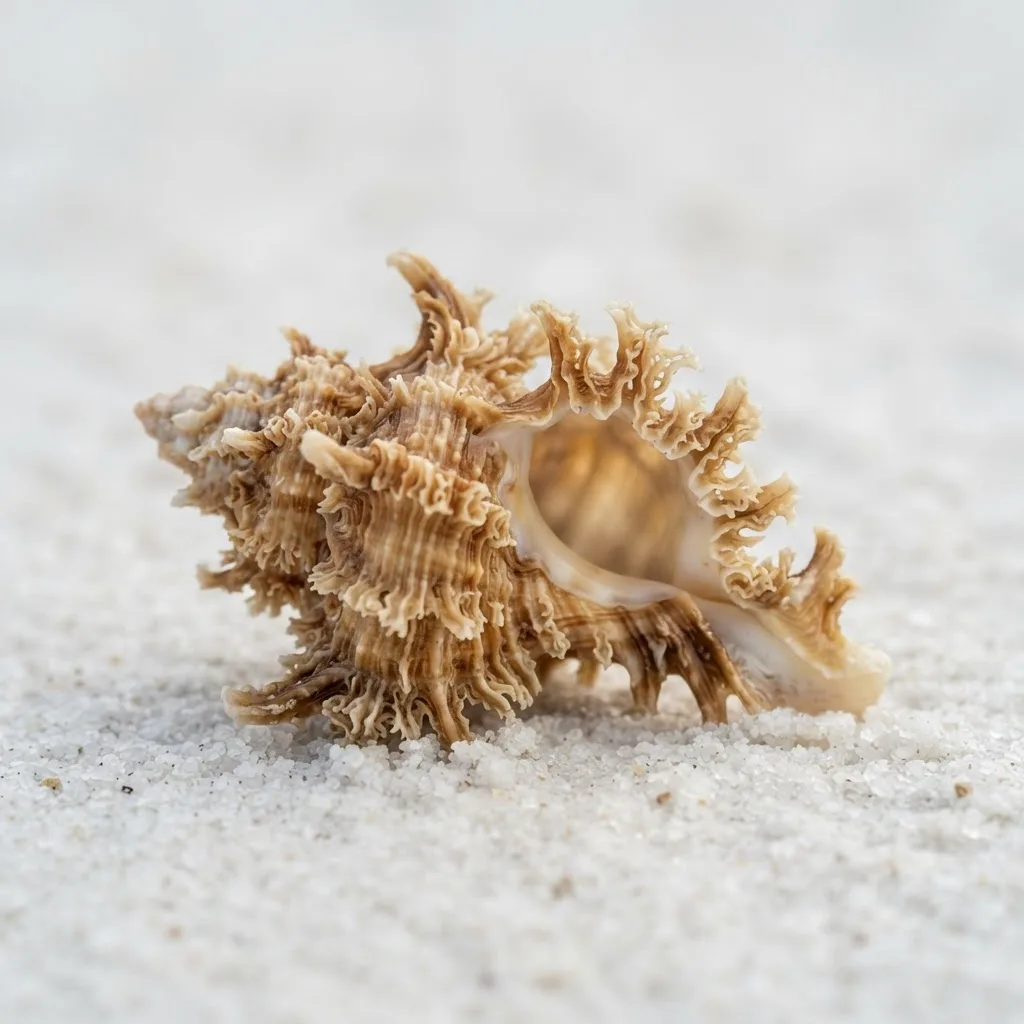
Lace Murex
Chicoreus dilectus · Muricidae
★★★ Uncommon 📏 2-3"
Spiraled shell with frilly, lace-like ribs.
🏝️ Rocky reefs🍽️ Other mollusks⏳ 8-10 years📍 Gulf beaches
🔍 Collecting tip: Look for the lacy texture.
💡 Has delicate, lace-like extensions on the shell.
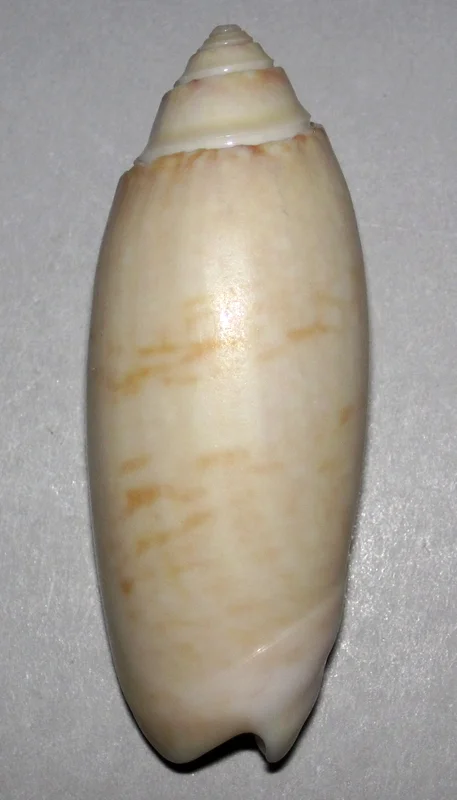
Lettered Olive
Oliva sayana · Olividae
★★★ Common 📏 2–3"
A smooth, cylindrical shell with a glossy surface. Tan to gray with zigzag brown markings.
🏝️ Wet sand at the surf line🍽️ Clams & sand crabs⏳ 5–7 years📍 All Gulf beaches
🔍 Collecting tip: Look for a trail in wet sand where a live olive is.
💡 Hunts just beneath wet sand at the wave's edge.
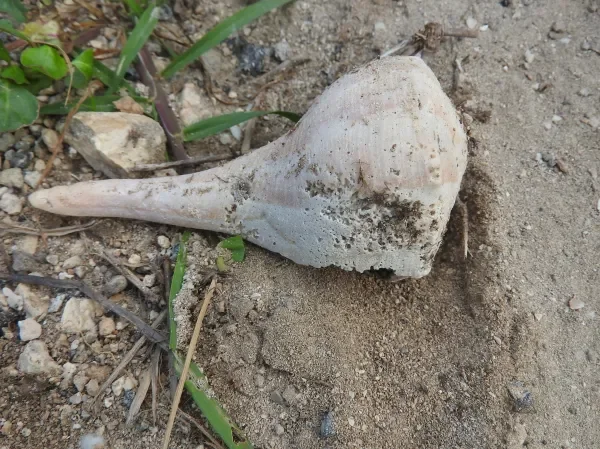
Lightning Whelk
Sinistrofulgur sinistrum · Busyconidae
★★★ Common 📏 4–16"
A large creamy-white shell with brown lightning-bolt streaks, uniquely spiraling to the left.
🏝️ Sandy Gulf shallows & mud flats🍽️ Oysters, clams, scallops⏳ 10–15 years📍 All SW Florida beaches
🔍 Collecting tip: Look at low tide on sandbars — the pointed spire peeks above wet sand.
💡 Florida's official state shell — spirals left-handed!
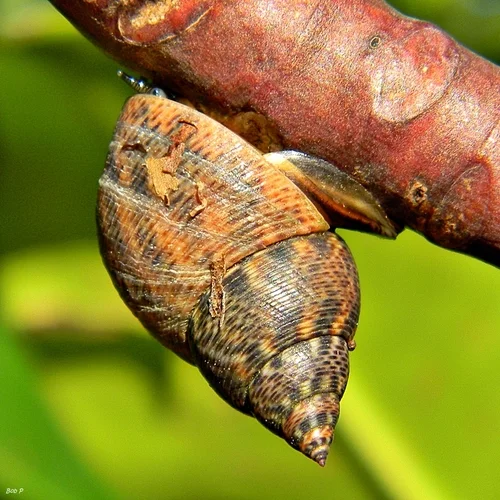
Mangrove Periwinkle
Littoraria angulifera · Littorinidae
★★★ Very Common 📏 0.5–1"
Small, pointed shell. Variable tan, gray, brown, or orange with darker streaks. Found climbing mangrove trees well above the waterline.
🏝️ Mangrove trunks, docks, pilings, above waterline🍽️ Algae and lichen on mangrove bark (grazer)⏳ 2–4 years📍 Mangrove shorelines, Ten Thousand Islands & Rookery Bay
🔍 Collecting tip: Look up, not down — check mangrove trunks and prop roots above the waterline.
💡 Lives almost entirely out of the water, climbing mangrove trunks well above the tideline to avoid aquatic predators like crabs.
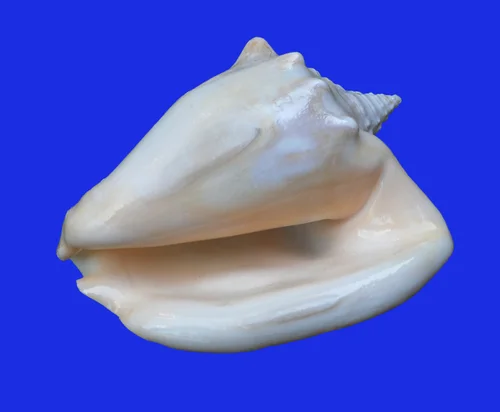
Milk Conch
Macrostrombus costatus · Strombidae
★★★ Rare 📏 4–7"
Large, heavy, white to cream conch with a thick flared lip. Interior is glazed white, hence "milk" conch.
🏝️ Sandy bottoms, seagrass beds, shallow waters near Keys🍽️ Algae and seagrass detritus⏳ 8–10 years📍 Occasional drift, Gulf beaches (native to the Florida Keys)
🔍 Collecting tip: A true rarity in SW Florida — most local finds have drifted north from Keys waters.
💡 The glossy white interior that gives it its name is unusual among Strombus-type conchs, most of which show orange or pink.
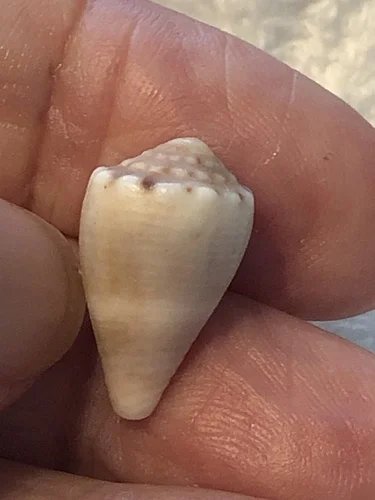
Mouse Cone
Conus mus · Conidae
★★★ Uncommon 📏 1–1.5"
Small, mouse-gray cone with a slightly elevated spire. Gray-brown with faint darker banding. Interior white.
🏝️ Rocky and rubble areas, shallow to moderate depths🍽️ Marine worms⏳ 5–8 years📍 Rubble flats, Bonita Beach & Marco Island
🔍 Collecting tip: Check shallow rubble patches at low tide, similar habitat to Alphabet Cone.
💡 Like all cone snails it hunts using a harpoon-like, venom-tipped radula tooth — handle any live cone snail with care.
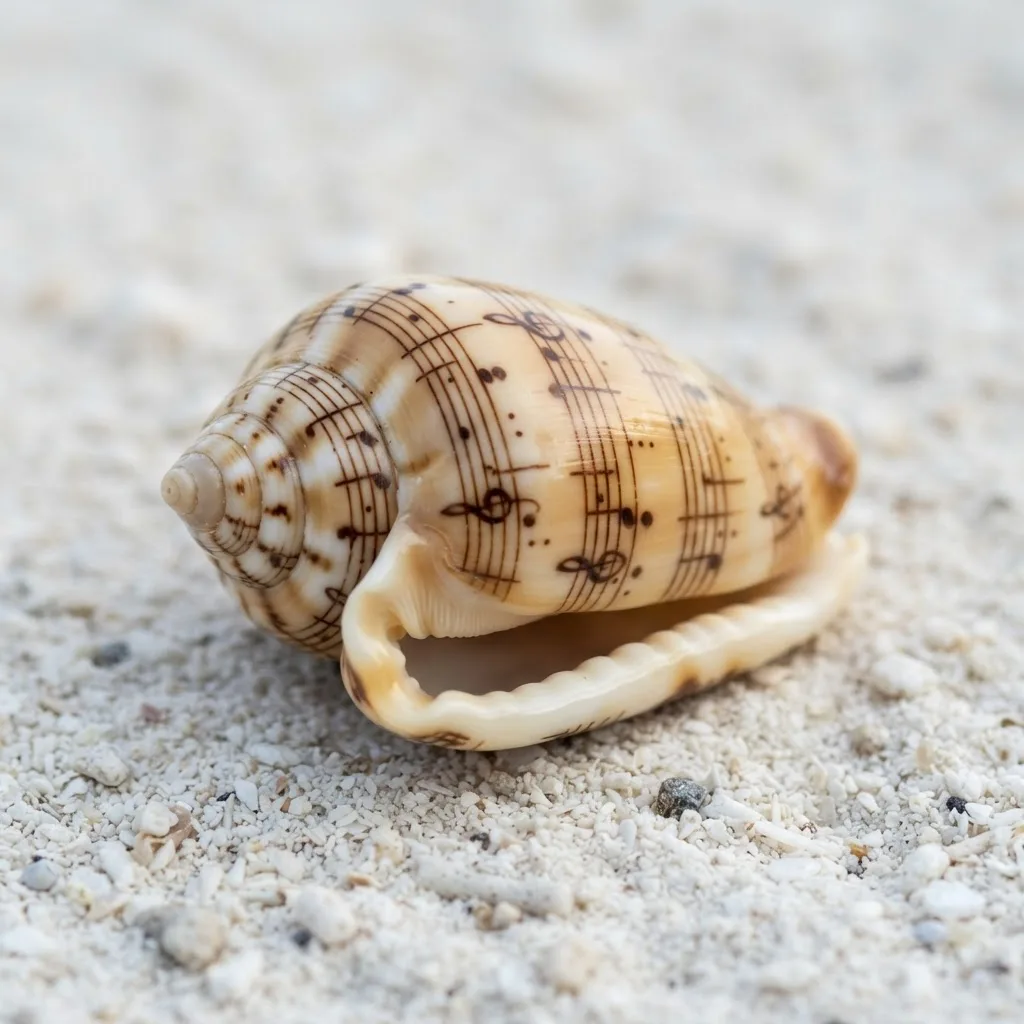
Music Volute
Voluta musica · Volutidae
★★★ Very Rare 📏 2–4"
Cream to tan shell with lines and dots resembling musical notation, hence the name. Oval with a short spire. Mainly a Caribbean species.
🏝️ Sandy bottoms, moderate to deep waters, Caribbean drift🍽️ Other mollusks (predatory)⏳ 5–8 years📍 Rare Caribbean drift, Gulf beaches
🔍 Collecting tip: Considered a legendary find locally — mainly a Caribbean species that only rarely drifts this far.
💡 The lines and dots across its surface resemble handwritten sheet music, which is exactly how it earned its name.

Olive Nerite
Neritina reclivata · Neritidae
★★★ Common 📏 0.3–0.5"
Small, rounded, olive-green to dark greenish-black shell. Smooth. Found on mangrove roots and rocks in brackish areas.
🏝️ Brackish waters, mangrove areas, river mouths🍽️ Algae (grazer)⏳ 2–4 years📍 Mangrove roots, Ten Thousand Islands
🔍 Collecting tip: Check mangrove prop roots at low tide rather than open Gulf beaches.
💡 Highly tolerant of brackish water, making it common well up into mangrove creeks and river mouths.
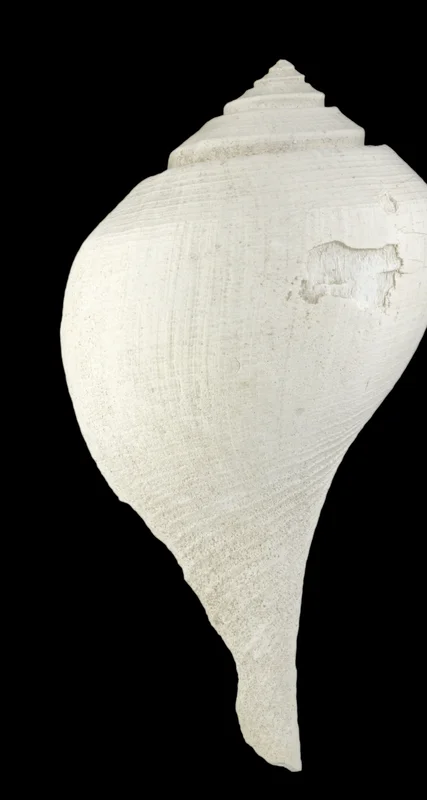
Pear Whelk
Busycotypus spiratus · Busyconidae
★★★ Common 📏 3-5"
A pear-shaped whelk with a wide body whorl and low spire.
🏝️ Sandy Gulf bottom🍽️ Clams & oysters⏳ 8-12 years📍 All SW Florida Gulf beaches
🔍 Collecting tip: Look for the spiral egg case strings nearby.
💡 Egg cases wash ashore in long rubbery strings.

Pitted Murex
Favartia cellulosa · Muricidae
★★★ Common 📏 0.5–1"
Small murex with distinctly pitted or cellular surface texture. White to gray. Three varices. Found under rocks and coral rubble.
🏝️ Rocky areas, under rubble, shallow waters🍽️ Small barnacles and encrusting invertebrates⏳ 2–3 years📍 Rubble zones, Sanibel & Captiva jetties
🔍 Collecting tip: Sift through coral rubble at the lowest tides.
💡 Its pitted, cellular-looking surface is unusual among local murex, most of which show spines or ribs instead.
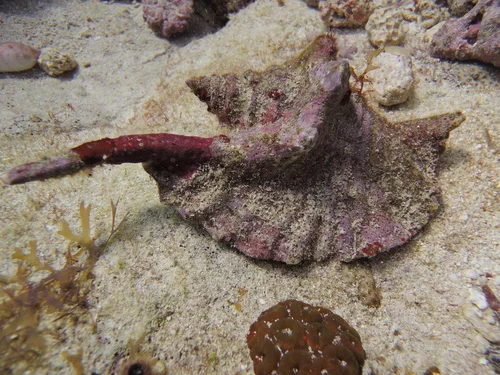
Rooster Tail Conch
Lobatus gallus · Strombidae
★★★ Rare 📏 4–6"
Distinctive conch with a long, curved, horn-like projection extending from the outer lip like a rooster's tail. Tan to brown.
🏝️ Sandy and rubble bottoms, moderate depths near Keys🍽️ Algae and seagrass detritus⏳ 8–10 years📍 Rare Gulf drift, native to Keys waters
🔍 Collecting tip: Check storm wrack after major tropical systems, when southern drift is more likely.
💡 The long, curved spur on the outer lip — its "rooster tail" — is unmistakable but exceptionally rare to find intact this far north.
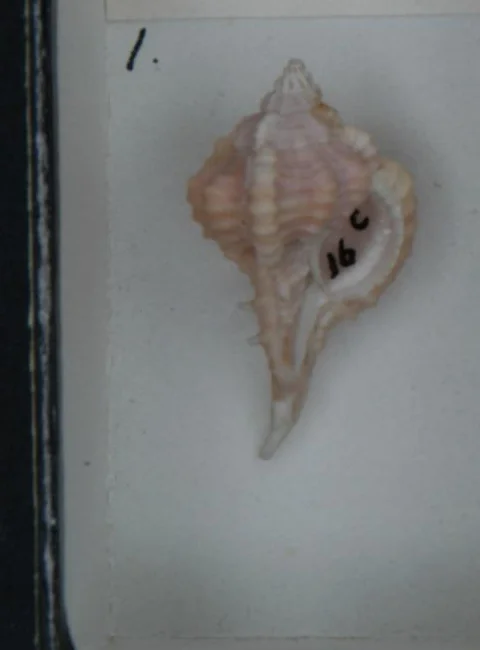
Rose Murex
Vokesimurex rubidus · Muricidae
★★★ Rare 📏 2-3"
Spiraled shell with rosy or reddish coloring.
🏝️ Rocky reefs🍽️ Other mollusks⏳ 8-10 years📍 Gulf beaches
🔍 Collecting tip: Look for rosy coloring.
💡 Named for the rosy coloring.
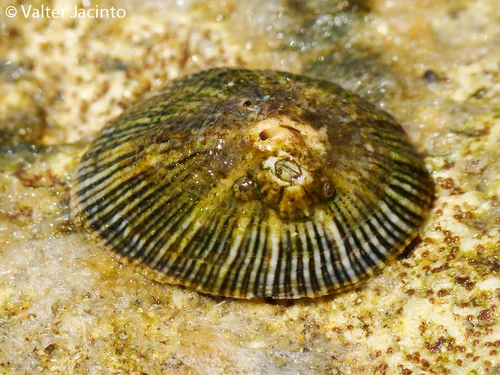
Say's False Limpet
Siphonaria pectinata · Siphonariidae
★★★ Very Common 📏 0.5–1"
Limpet-shaped air-breathing snail with radiating ribs and a slightly off-center apex. Gray to brown with darker ribs. Not a true limpet.
🏝️ Rocky intertidal, seawalls, splash zone🍽️ Algae (grazer)⏳ 2–3 years📍 Seawalls and rocks, all SW Florida jetties
🔍 Collecting tip: Check seawalls and jetty rocks at low tide — one of the most reliably found species in this guide.
💡 Despite its limpet-like shape it's actually a pulmonate (air-breathing) snail, not a true limpet at all — hence "false" limpet.
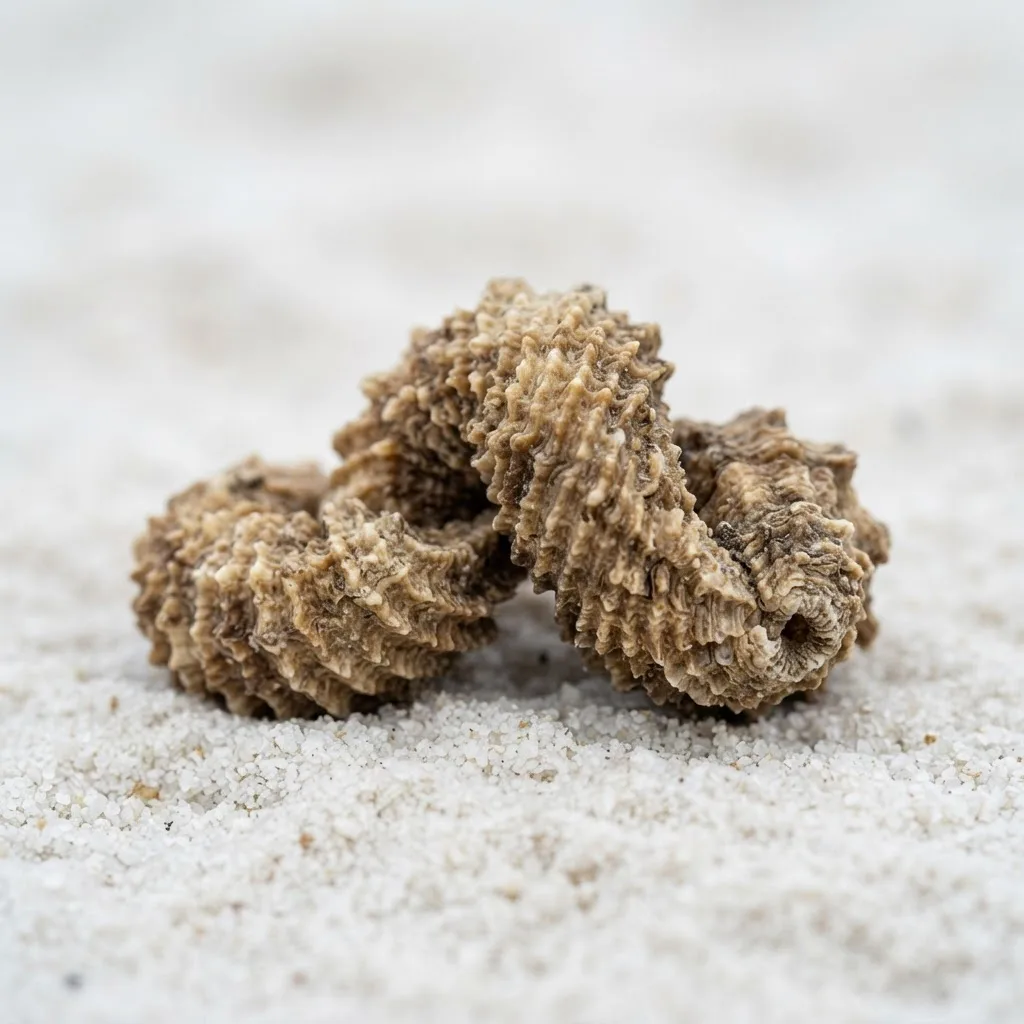
Scaled Worm Shell
Serpulorbis decussatus · Vermetidae
★★★ Common 📏 1–3" (irregular)
Irregular tube shell with scaled or ribbed texture. Tan to brown. Attached to substrate. More textured than smooth Worm Shell.
🏝️ Rocks, coral, hard substrates, shallow waters🍽️ Plankton (filter feeder)⏳ 5–8 years📍 Rocks and hard substrate, Gulf-side jetties
🔍 Collecting tip: Check the same rubble and rock surfaces as the smooth Worm Shell.
💡 Its ribbed, scaled texture makes it easy to tell apart from the smoother Worm Shell when both are cemented to the same rock.
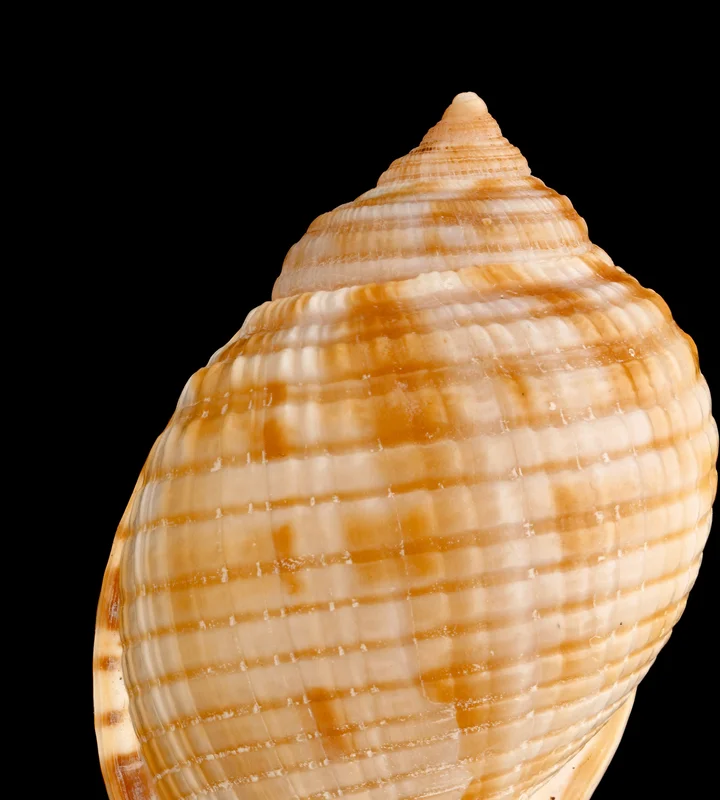
Scotch Bonnet
Semicassis granulata · Cassidae
★★★ Uncommon 📏 2-4"
Rounded with a short spire, cream with spiral rows of square brown spots.
🏝️ Sandy bottom🍽️ Sand dollars⏳ 8-12 years📍 Sanibel, Captiva
🔍 Collecting tip: Check the drift line after major storms.
💡 North Carolina's official state shell.

Sculptured Top Shell
Calliostoma euglyptum · Calliostomatidae
★★★ Uncommon 📏 0.5–1"
Small, conical shell with beautifully beaded spiral cords. Tan to brownish with pearly undertones.
🏝️ Rocky and rubble areas, moderate depths🍽️ Algae and detritus (grazer)⏳ 3–5 years📍 Rubble bottoms offshore, Naples & Marco Island
🔍 Collecting tip: Best found in rubble drift rather than open sand.
💡 The beaded spiral cords and pearly undertones make this one of the more elegant micro-shells found in Gulf rubble.

Shark Eye Moon Snail Egg Collar
Neverita duplicata (egg collar) · Naticidae
★★★ Common 📏 2–5" diameter
A rubbery, C-shaped to circular sand collar formed from sand grains cemented with mucus — the egg case of the Shark Eye Moon Snail, not a shell at all. Flexible when wet, crumbly when dry.
🏝️ Sandy intertidal beaches, exposed after nesting🍽️ N/A — an egg case, not a feeding shell; the snail itself preys on clams and bivalves⏳ Collar lasts days to weeks; the snail lives 3–6 years📍 Sandy beach flats, all SW Florida Gulf beaches
🔍 Collecting tip: Look for a dark, rubbery ring or partial circle in the wet sand near the tideline, especially in warmer months.
💡 It's literally thousands of moon snail eggs embedded in a sand-and-mucus ribbon that the snail shapes using its own foot as a mold.
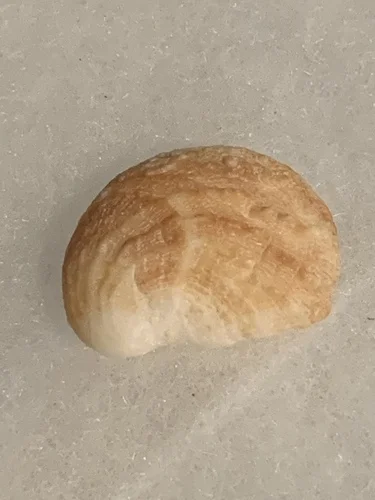
Spiny Slipper Shell
Crepidula aculeata · Calyptraeidae
★★★ Common 📏 0.5–1"
Slipper shell with spiny or thorny exterior projections. Grayish-brown. Interior shelf present.
🏝️ Hard substrates, rocks, other shells, shallow waters🍽️ Plankton (filter feeder)⏳ 1–3 years📍 Rocks and shells, Gulf-side jetties
🔍 Collecting tip: Check rough surfaces — rocks, pilings, and other shells — for its distinctive spiky texture.
💡 The spiny, thorny texture sets it apart from the many smooth-shelled slipper species in the same genus.
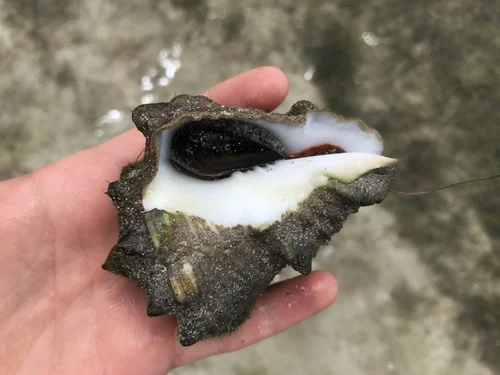
Spiny Vase Shell
Vasum muricatum · Turbinellidae
★★★ Rare 📏 2–4"
Heavy, vase-shaped shell with prominent spines on the shoulder. Brown to tan. Interior pink to orange. A deep-water species that rarely washes ashore.
🏝️ Rocky and coral areas, moderate to deep waters🍽️ Other mollusks and worms⏳ 8–12 years📍 Deep rocky/coral areas, rarely on beaches
🔍 Collecting tip: A genuine trophy find — check storm wrack after major Gulf storms.
💡 Its heavy, spine-studded shoulder and pink-to-orange interior make it one of the most striking, and rare, finds covered in this guide.
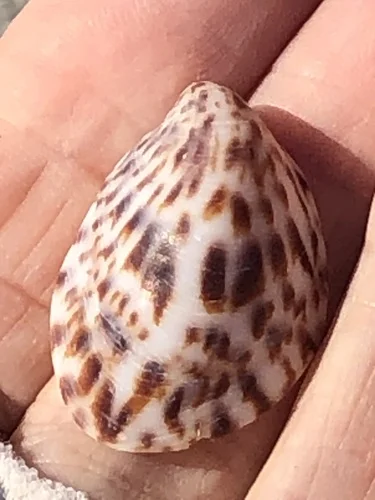
Spotted Slipper Shell
Crepidula maculosa · Calyptraeidae
★★★ Common 📏 0.5–1"
Slipper-shaped shell with brown spots or mottling on a cream background. Internal shelf present. Often found on gastropod shells.
🏝️ On other shells and hard substrates, shallow waters🍽️ Plankton (filter feeder)⏳ 1–3 years📍 Attached to whelk & conch shells, all Gulf beaches
🔍 Collecting tip: Check the undersides of larger empty gastropod shells for hitchhikers.
💡 Slipper shells are sequential hermaphrodites — they start life as males and later become female, often stacking in a chain.
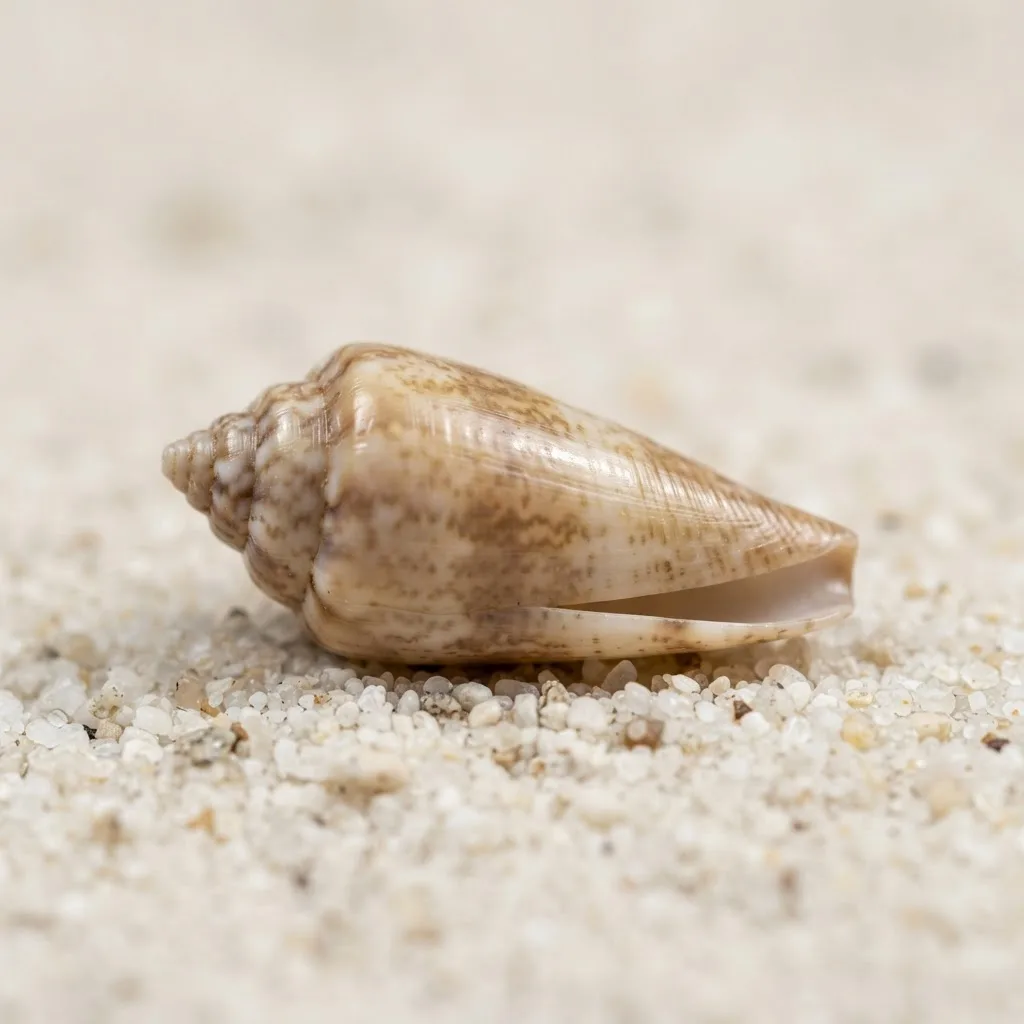
Stearns' Cone
Conus stearnsi · Conidae
★★★ Uncommon 📏 0.5–1"
Small cone with tan to brownish coloring and faint spiral lines. Low spire. Found in deeper water drift more often than in shallow beach finds.
🏝️ Sandy and rubble bottoms, moderate depths🍽️ Marine worms⏳ 4–6 years📍 Offshore drift, Gulf side
🔍 Collecting tip: Check shell-hash piles after dredging or major storms rather than open sand.
💡 More often recovered from deeper-water drift material than picked up directly on the beach.
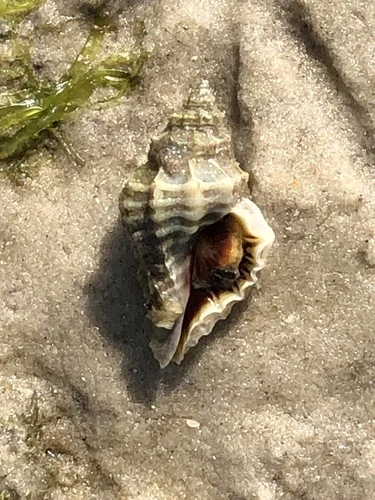
Tampa Drill
Urosalpinx tampaensis · Muricidae
★★★ Common 📏 0.5–1"
Small, sturdy drill with axial ribs and spiral threads. Gray to brown. Found throughout SW Florida on oyster beds.
🏝️ Oyster reefs, rocky areas, shallow waters🍽️ Oysters and barnacles⏳ 2–4 years📍 Oyster reefs, all SW Florida bays
🔍 Collecting tip: Look among oyster clusters alongside Gulf Oyster Drills.
💡 First described from Tampa Bay, but ranges throughout SW Florida's oyster beds.
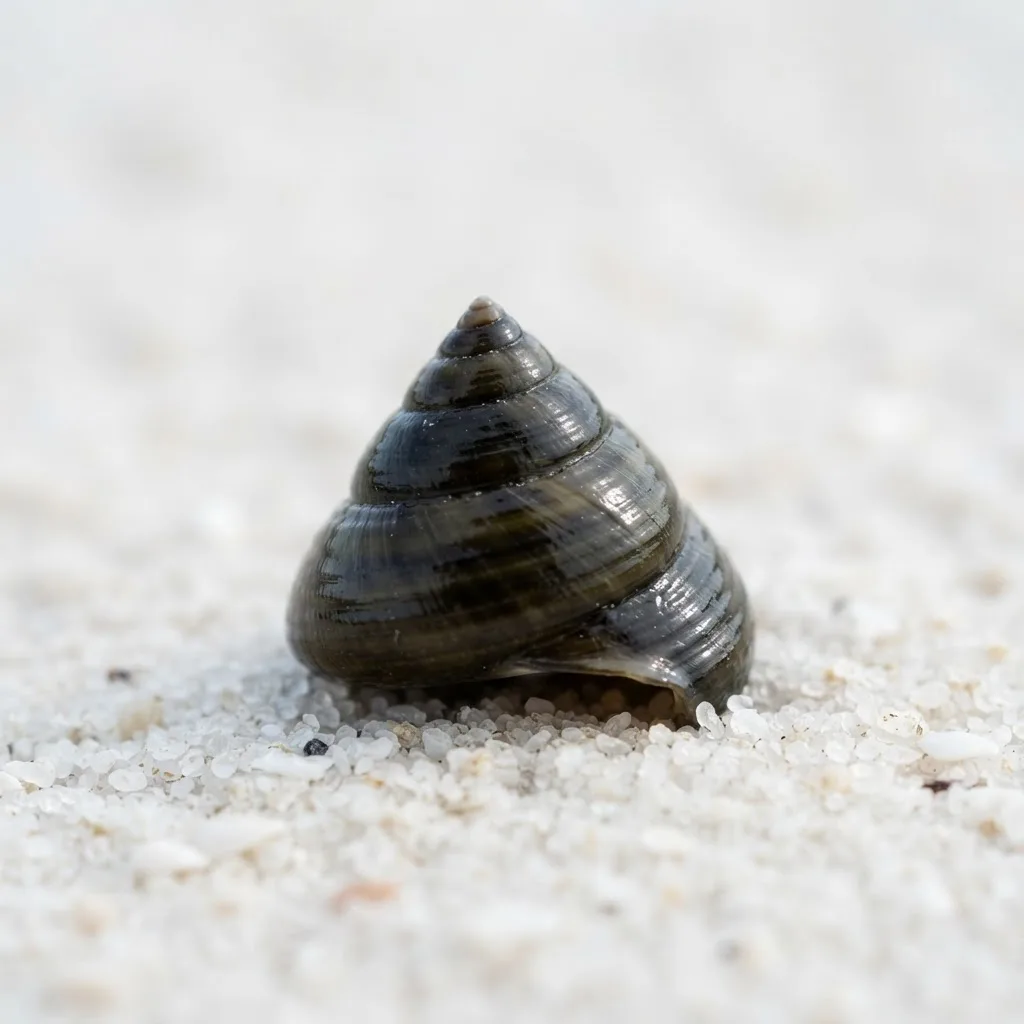
Tegula-Like Top Shell
Tegula fasciata · Tegulidae
★★★ Common 📏 0.5–1"
Small, smooth, dark-colored top shell. Olive to dark brown or black. Found under rocks at low tide.
🏝️ Rocky intertidal, under rocks, algae-covered surfaces🍽️ Algae (grazer)⏳ 2–4 years📍 Rocky intertidal, Sanibel Causeway
🔍 Collecting tip: Check under rocks at low tide alongside nerites and periwinkles.
💡 Often so encrusted with coralline algae that the shell itself is hard to spot until you look closely at rocks.
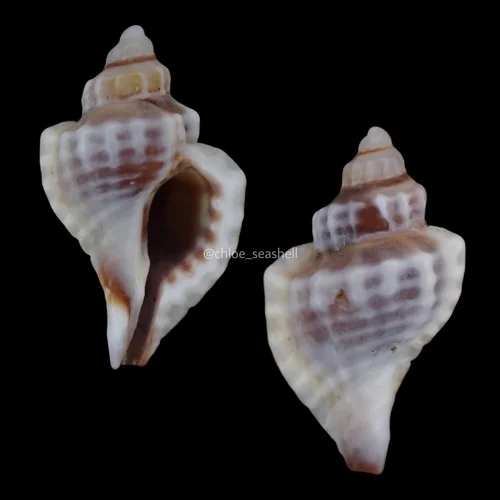
Thick-Lipped Drill
Eupleura caudata · Muricidae
★★★ Common 📏 0.5–1"
Small drill with two prominent varices and a long siphonal canal. Gray to white. Two wing-like varices give it a distinctive profile.
🏝️ Oyster reefs, hard substrates, shallow waters🍽️ Oysters and other bivalves⏳ 2–4 years📍 Oyster reefs, Naples Bay & Estero Bay
🔍 Collecting tip: Search encrusted oyster clusters at low tide.
💡 Its two flared, wing-like varices are thought to help wedge the shell in place as it drills into oyster prey.
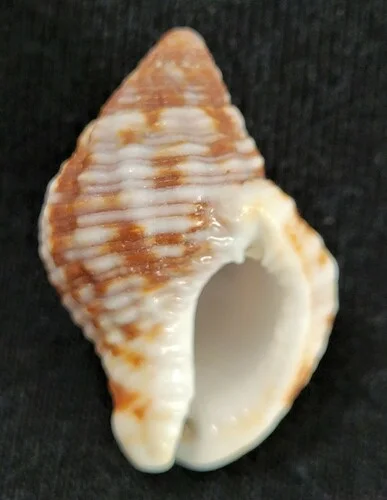
Tinted Cantharus
Gemophos tinctus · Buccinidae
★★★ Common 📏 0.5–1"
Small whelk-like shell with cancellate sculpture. Gray-brown with occasional orange tint. Common under rocks in intertidal.
🏝️ Rocky and rubble areas, shallow waters🍽️ Small invertebrates and carrion⏳ 3–5 years📍 Intertidal rubble, Sanibel & Bonita Beach
🔍 Collecting tip: Look under rocks alongside Gaudy Cantharus.
💡 Closely related to the Gaudy Cantharus and often found sharing the same rubble habitat.
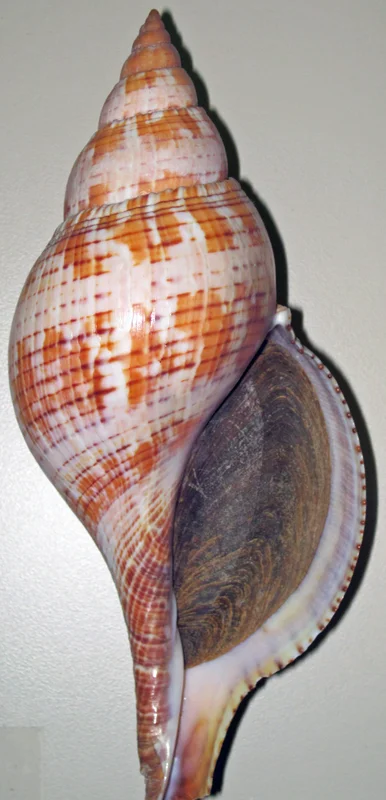
True Tulip
Fasciolaria tulipa · Fasciolariidae
★★★ Common 📏 3–6"
Elongated with a pointed spire. Gray to orange with brown spiral lines.
🏝️ Shallow sandy & grassy bottoms🍽️ Mollusks & worms⏳ 10–15 years📍 All SW Florida
🔍 Collecting tip: Check low tide areas at dawn.
💡 An active predator that drills into other mollusks.

Turnip Whelk
Busycon coarctatum · Busyconidae
★★★ Uncommon 📏 3–5"
Compact, turnip-shaped whelk with smooth, rounded whorls. Tan to gray. Less elongated than Lightning or Pear Whelk.
🏝️ Sandy bottoms, moderate depths offshore🍽️ Clams and oysters⏳ 8–10 years📍 Offshore sand flats, Sanibel & Captiva drift
🔍 Collecting tip: Check storm-driven beach wrack after strong offshore winds.
💡 Unlike drilling murex shells, whelks like this one pry bivalve prey open using the edge of their own shell.
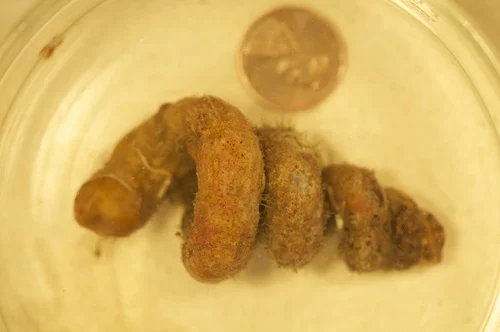
West Indian Worm Shell
Vermicularia spirata · Turritellidae
★★★ Common 📏 2–5" (total length)
Starts as a tightly coiled turritella-like shell, then uncoils into an irregular tube. Tan to brown. Often found embedded in sponges.
🏝️ Sponges, rubble, shallow to moderate depths🍽️ Plankton and detritus (filter feeder)⏳ 3–6 years📍 Embedded in sponges, Gulf-side reefs and rubble
🔍 Collecting tip: Look for the tightly coiled juvenile tip still attached to an otherwise irregular tube.
💡 It begins life as a perfectly coiled turritella-like spiral, then abandons that shape entirely and grows into a loosely uncoiled tube.
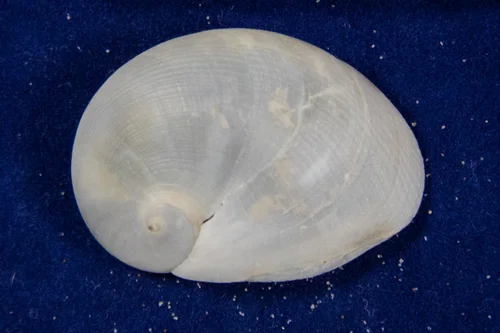
White Baby Ear
Sinum perspectivum · Naticidae
★★★ Common 📏 1–1.5"
Flat, ear-shaped shell with a very depressed spire — almost flat. Pure white. Smooth with fine growth lines.
🏝️ Sandy bottoms, shallow waters🍽️ Small clams and bivalves⏳ 2–4 years📍 Sandy flats, Fort Myers Beach & Sanibel
🔍 Collecting tip: Look for a flat, white, ear-shaped shell in wrack lines rather than upright spirals.
💡 Its spire is so depressed it's almost flat, giving the shell its distinctive "ear" silhouette.
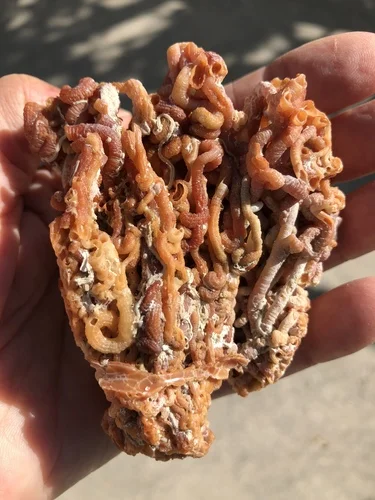
Worm Shell (Irregular)
Petaloconchus varians · Vermetidae
★★★ Common 📏 1–4" (irregular)
Not a typical snail — grows as irregular, tube-like whorls cemented to hard surfaces. White to tan. Often mistaken for worm tubes.
🏝️ Attached to rocks, coral, other shells, shallow waters🍽️ Plankton (filter feeder using a mucus net)⏳ 5–8 years📍 Rocks and coral rubble, Sanibel & Naples jetties
🔍 Collecting tip: Look for tangled, worm-like white tubes cemented to rocks rather than a loose shell.
💡 It starts life as a normal coiled snail, then cements itself in place and grows into a tangled, irregular tube — abandoning the typical gastropod shape entirely.
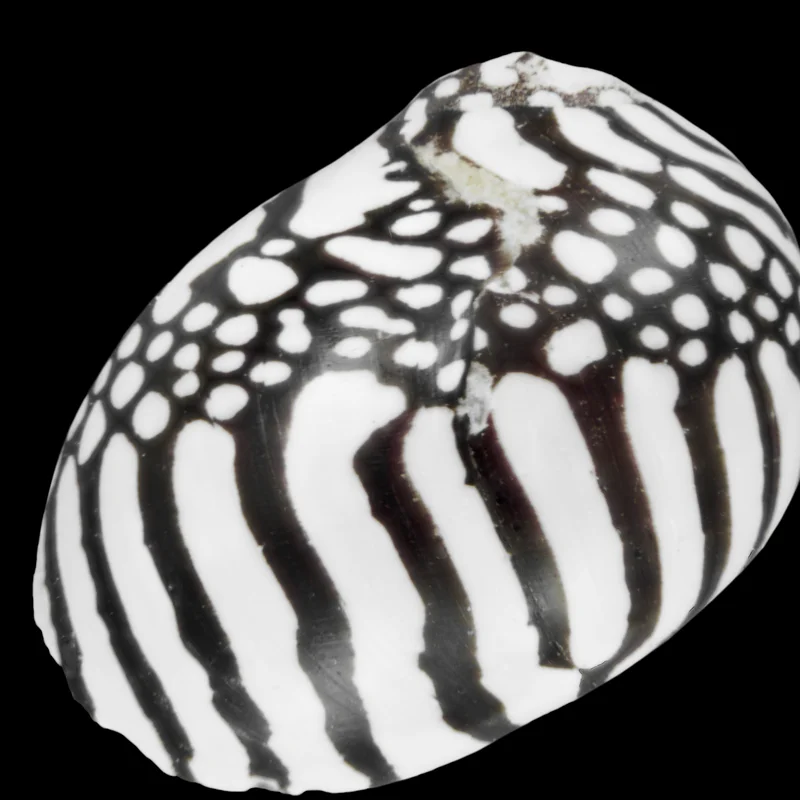
Zebra Nerite
Puperita pupa · Neritidae
★★★ Common 📏 0.2–0.4"
Tiny shell with bold black and white zebra stripes. Very striking pattern for such a small shell. Multiple color forms exist.
🏝️ Rocky intertidal, splash zone, jetties🍽️ Algae (grazer)⏳ 2–3 years📍 Rocky splash zone, Gulf-side jetties
🔍 Collecting tip: Check rocks right at the waterline near other nerite species.
💡 Color pattern varies quite a bit between individuals — no two zebra stripes are quite the same.
Two-halved hinged shells — scallops, cockles, tellins, clams and arks. Usually found as single valves in the wrack line.
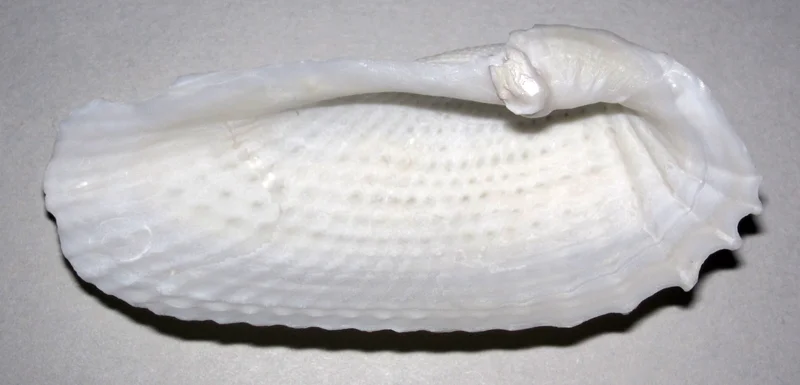
Angel Wing
Cyrtopleura costata · Pholadidae
★★★ Uncommon 📏 4-7"
Pure white paired shells with elegant radiating ribs — like outstretched wings. Very fragile.
🏝️ Mud flats & sandy mud🍽️ Plankton (filter feeder)⏳ 5-8 years📍 Ten Thousand Islands
🔍 Collecting tip: Search mudflat edges at extreme low tides.
💡 Buries up to 1 foot deep in mud flats.
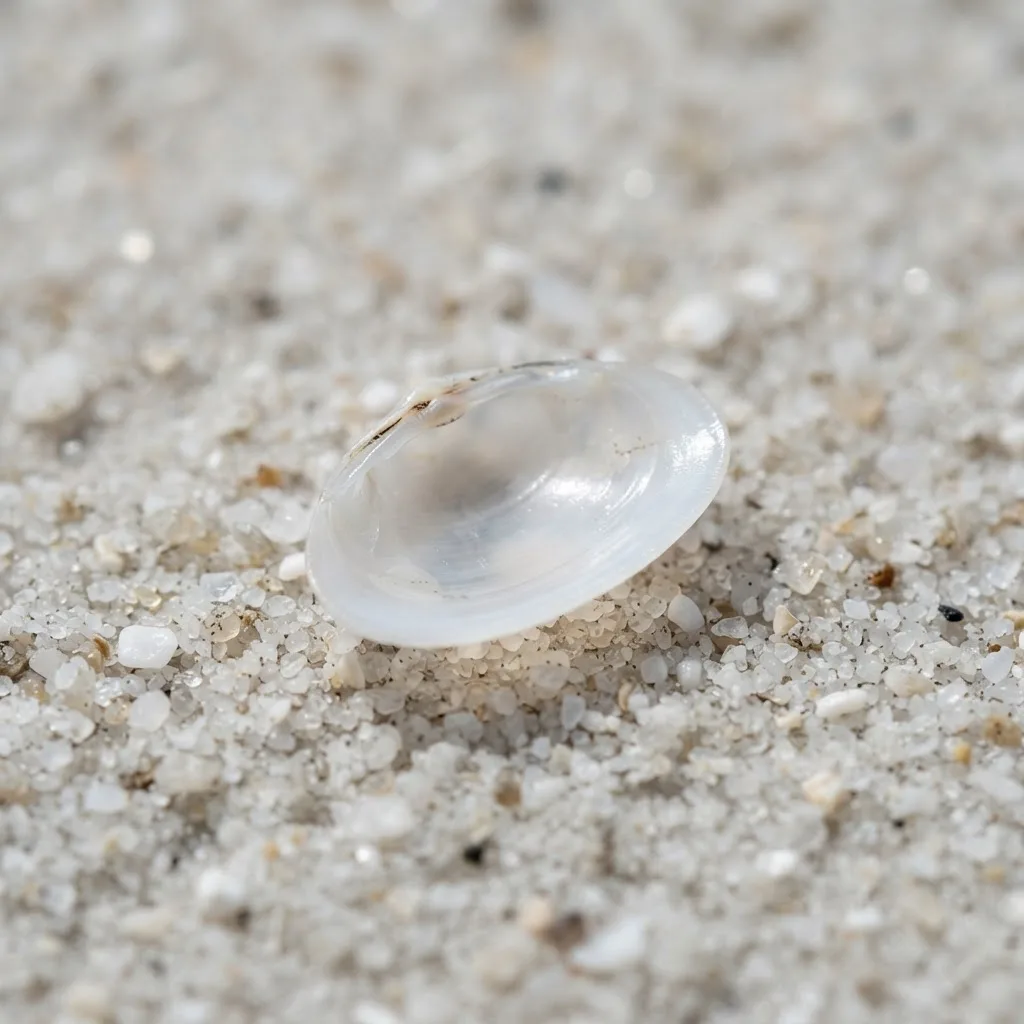
Atlantic Abra
Abra aequalis · Semelidae
★★★ Common 📏 0.2–0.5"
Extremely small, thin, translucent white shell. Oval-shaped. Almost transparent. Found in fine shell drift.
🏝️ Sandy-mud bottoms, shallow subtidal🍽️ Detritus (deposit feeder)⏳ 1–2 years📍 Sandy-mud flats, all Gulf bays
🔍 Collecting tip: Requires careful sifting of fine sediment — easy to miss without close inspection.
💡 Nearly transparent in life, it's one of the most delicate and easily overlooked bivalves in Gulf sand.
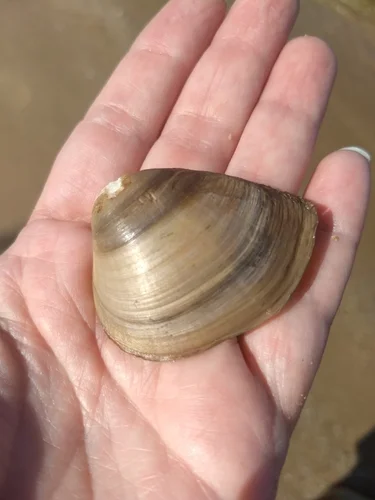
Atlantic Rangia
Rangia cuneata · Mactridae
★★★ Common 📏 1–2"
Thick, heavy, triangular clam. Gray to brown with thick periostracum. Tolerates very low salinity, found in nearly fresh water estuaries.
🏝️ Brackish estuaries, river mouths, low salinity waters🍽️ Plankton (filter feeder)⏳ 8–12 years📍 Brackish river mouths, Ten Thousand Islands & Caloosahatchee estuary
🔍 Collecting tip: Check brackish river mouths and low-salinity creeks rather than open Gulf beaches.
💡 Remarkably tolerant of low salinity, it thrives in nearly fresh water where few other bivalves can survive.

Bicolor Purse Oyster
Isognomon bicolor · Isognomonidae
★★★ Common 📏 1–2"
Small, flat oyster similar to Flat Tree Oyster but with bicolored interior — purple and cream. Thin and irregular.
🏝️ Mangrove roots, rocks, intertidal hard surfaces🍽️ Plankton (filter feeder)⏳ 2–4 years📍 Mangrove roots, Ten Thousand Islands
🔍 Collecting tip: Check the same mangrove roots as Flat Tree Oyster, just look for smaller shells.
💡 The purple-and-cream interior is the easiest way to tell it apart from the larger Flat Tree Oyster it shares mangrove habitat with.

Broad-Ribbed Cardita
Carditamera floridana · Carditidae
★★★ Common 📏 1–1.5"
Sturdy, small bivalve with about 15-18 strong radial ribs. White to brown, sometimes with alternating color on ribs. Thick-shelled for its size.
🏝️ Rocky areas, under rubble, crevices, shallow waters🍽️ Plankton (filter feeder)⏳ 3–5 years📍 Rocky crevices, Gulf-side jetties
🔍 Collecting tip: Check under rocks alongside ark shells.
💡 Its 15–18 strong radial ribs, sometimes alternating in color, make it one of the more boldly sculptured small bivalves in this guide.
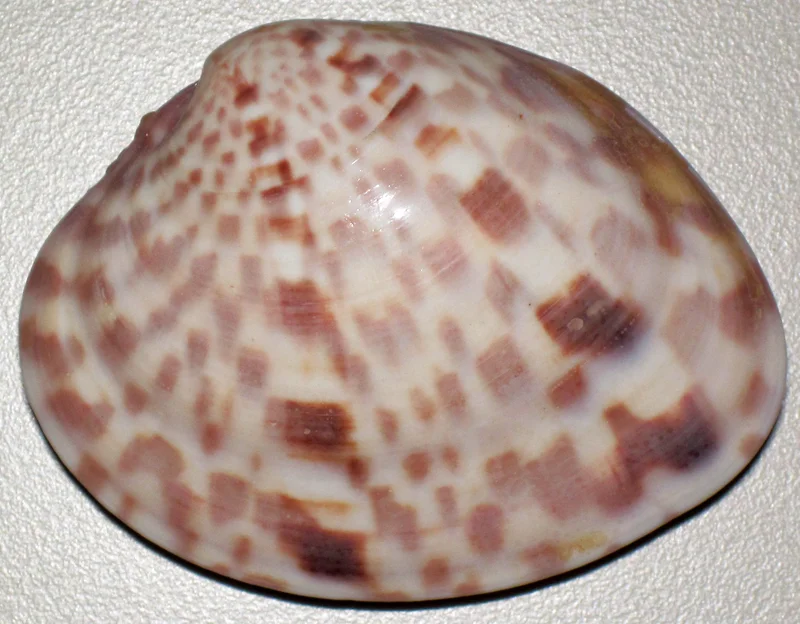
Calico Clam
Macrocallista maculata · Veneridae
★★★ Common 📏 2-4"
Glossy clamshell with mottled spots and blotches.
🏝️ Sandy bottom🍽️ Plankton⏳ 8-10 years📍 All Gulf beaches
🔍 Collecting tip: Similar to Sunray Venus but with spot pattern.
💡 Has spots or 'calico' pattern instead of rays.
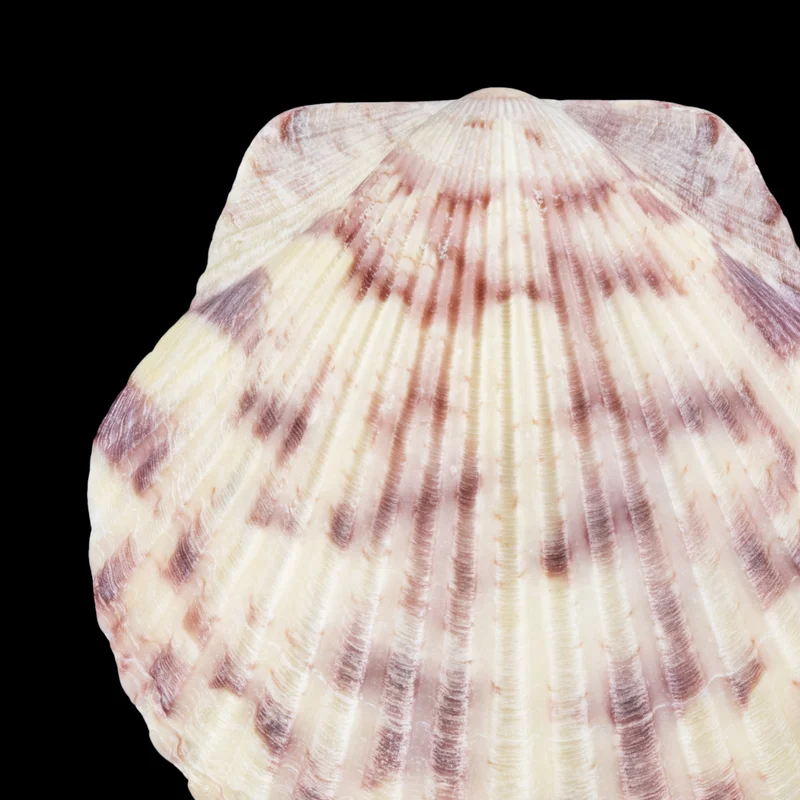
Calico Scallop
Argopecten gibbus · Pectinidae
★★★ Common 📏 1-2.5"
Fan-shaped with equal ribs. Colors vary wildly — white, pink, orange, purple, brown.
🏝️ Sandy bottom🍽️ Plankton⏳ 18-24 months📍 Fort Myers Beach
🔍 Collecting tip: Thousands wash ashore after winter cold fronts.
💡 Has up to 35 tiny eyes along its mantle edge!
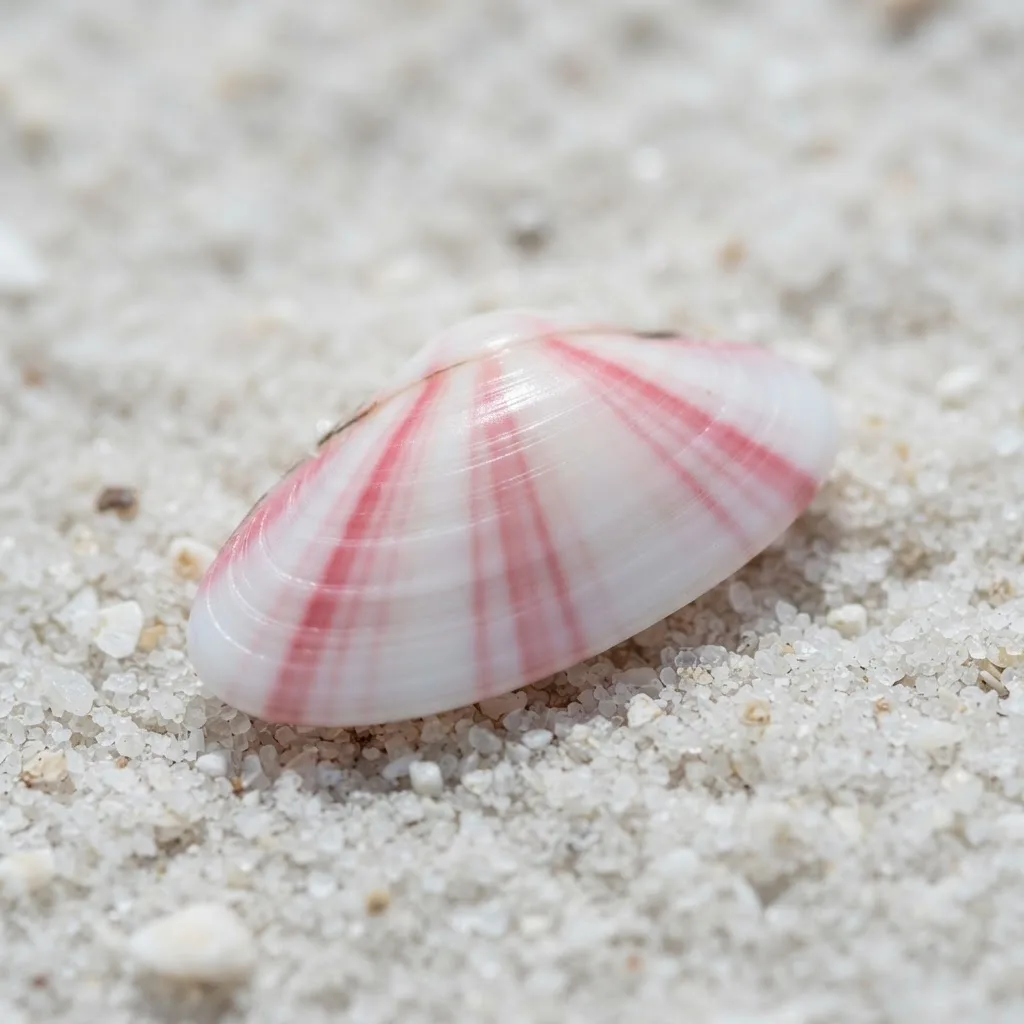
Candy Stick Tellin
Tellina similis · Tellinidae
★★★ Common 📏 0.5–1"
Small, smooth, elongated tellin with pink to rose rays on a white background, like a candy stick. Delicate and attractive.
🏝️ Sandy bottoms, shallow waters🍽️ Detritus (deposit feeder using long siphons)⏳ 2–3 years📍 Sandy flats, all Gulf beaches
🔍 Collecting tip: Sift fine sand at the waterline for its thin, candy-striped shell.
💡 Tellins use one long siphon like a vacuum hose to suck up organic material from the sand surface without ever fully emerging.
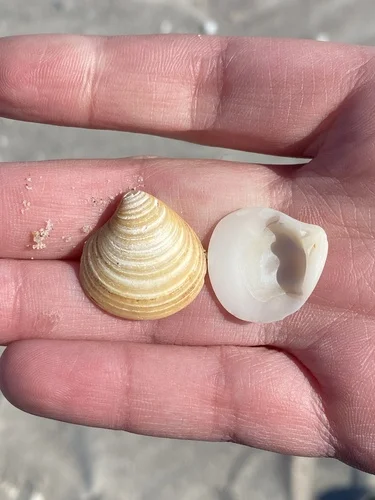
Chestnut Clam
Astarte castanea · Astartidae
★★★ Uncommon 📏 0.5–1"
Small, rounded, thick shell with strong concentric ridges. Dark chestnut-brown, sometimes with lighter bands. Very solid for its small size.
🏝️ Sandy-mud bottoms, moderate depths🍽️ Plankton (filter feeder)⏳ 6–10 years📍 Muddy sand, Gulf-side bays
🔍 Collecting tip: Check muddy sand patches for its dark chestnut-brown coloring.
💡 Its thick, solid shell and slow growth make it comparatively long-lived for such a small clam.
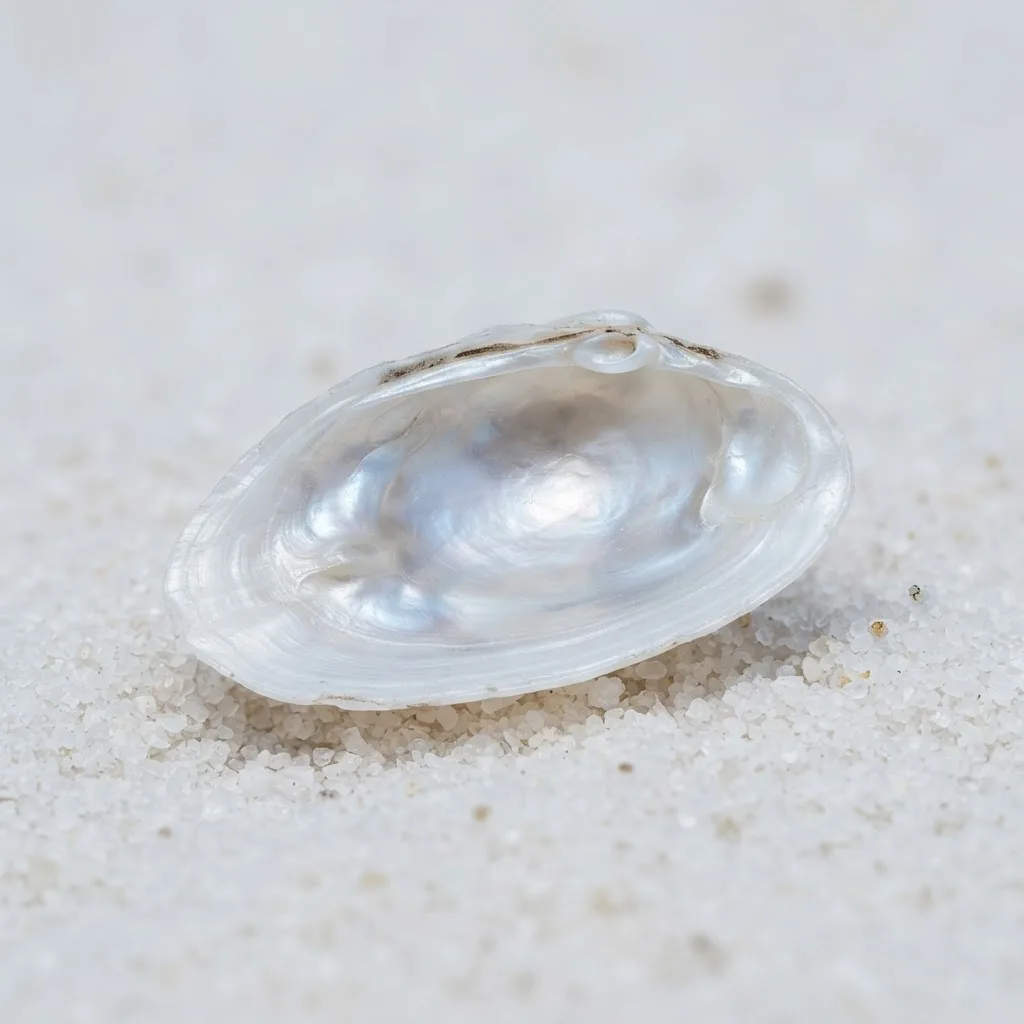
Common Spoon Shell
Periploma margaritaceum · Periplomatidae
★★★ Common 📏 0.5–1"
Thin, white, fragile shell with an internal spoon-shaped chondrophore (internal projection for ligament attachment). Pearly interior.
🏝️ Sandy-mud bottoms, shallow to moderate depths🍽️ Plankton (filter feeder)⏳ 2–4 years📍 Sandy-mud flats, Gulf-side bays
🔍 Collecting tip: Handle carefully — like many thin white bivalves it's fragile and easily broken.
💡 Named for the small spoon-shaped internal projection, called a chondrophore, that anchors its ligament.
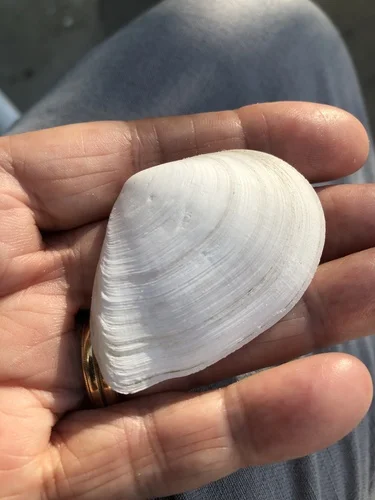
Constricted Macoma
Macoma constricta · Tellinidae
★★★ Common 📏 1.5–2.5"
Thin, white to yellowish oval shell with a distinctive constriction or pinch on the posterior end. Chalky white. Thin and fragile.
🏝️ Sandy-mud bottoms, shallow bays and estuaries🍽️ Detritus (deposit feeder)⏳ 3–5 years📍 Sandy-mud bays, Gulf-side estuaries
🔍 Collecting tip: Feel along the posterior edge for the telltale constriction.
💡 The distinctive pinch or constriction near the shell's posterior end is the single easiest field mark for identifying it.
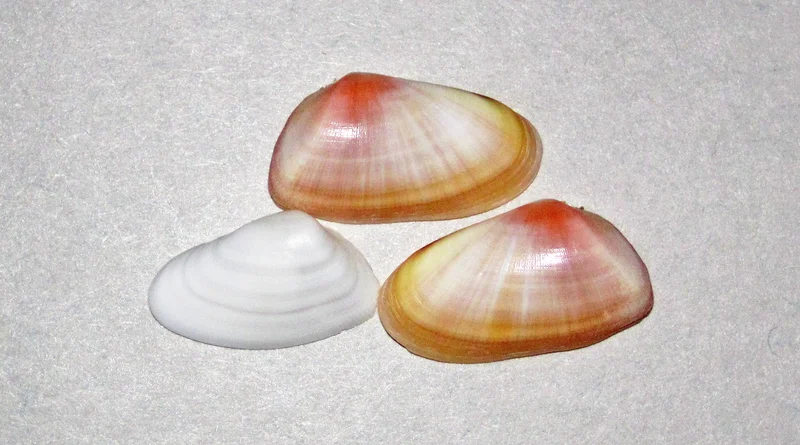
Coquina
Donax variabilis · Donacidae
★★★ Common 📏 0.5-1"
Tiny, colorful fan-shaped shell.
🏝️ Sandy surf zone🍽️ Plankton⏳ 3-5 years📍 All Gulf beaches
🔍 Collecting tip: Found in massive piles at the surf line.
💡 One of the most colorful small shells on the beach.
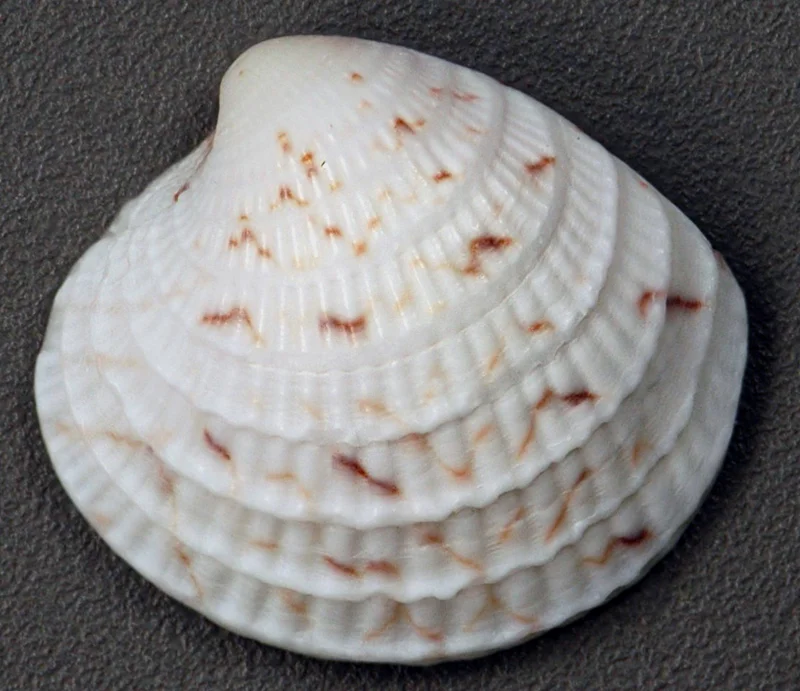
Cross-Barred Venus
Chione elevata · Veneridae
★★★ Common 📏 1-2"
Small to medium clamshell with fine cross-hatching ribs.
🏝️ Sandy to muddy bottom🍽️ Plankton⏳ 6-8 years📍 All Gulf beaches
🔍 Collecting tip: Look in sand after storms.
💡 Named for the cross-pattern of ribs on the shell.

Cross-Hatched Lucine
Divaricella quadrisulcata · Lucinidae
★★★ Common 📏 0.5–1"
Small, round, white shell with distinctive divaricate (chevron-shaped) sculpture on the surface. Unlike any other local bivalve.
🏝️ Sandy bottoms, shallow to moderate depths🍽️ Filter feeding supplemented by sulfur-oxidizing bacteria in its gills⏳ 5–8 years📍 Sandy flats, all SW Florida beaches
🔍 Collecting tip: Look for the distinctive chevron-shaped crosshatched sculpture unlike any other local shell.
💡 Like other lucines, it hosts symbiotic bacteria in its gills that convert sulfur compounds into food — a chemosynthetic partnership similar to deep-sea vent life.
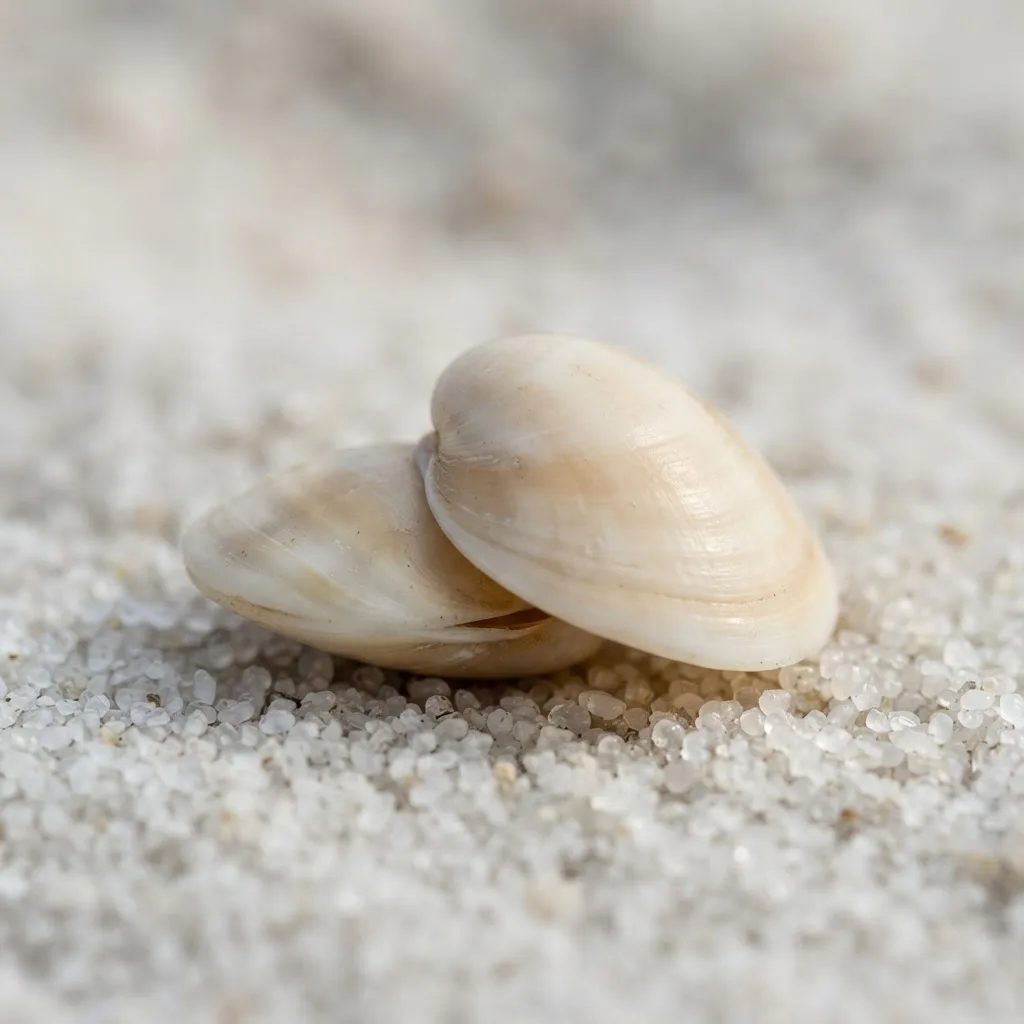
Dietz's Corbula
Caryocorbula dietziana · Corbulidae
★★★ Common 📏 0.2–0.4"
Tiny, inequivalve bivalve — right valve larger than left. White to tan. Very small. Common in fine sediment samples.
🏝️ Sandy-mud bottoms, shallow bays🍽️ Plankton and detritus⏳ 1–2 years📍 Sandy-mud bays, Gulf-side flats
🔍 Collecting tip: Sift fine sediment samples for its small, unevenly sized valves.
💡 One valve is noticeably larger than the other and overlaps it at the edge — an unusual asymmetry among local bivalves.
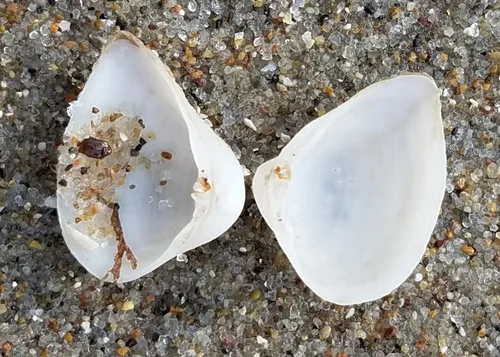
Dwarf Surf Clam
Mulinia lateralis · Mactridae
★★★ Very Common 📏 0.3–0.5"
Tiny, triangular, inflated clam. White to yellowish. Extremely abundant in shallow bays. Found by hundreds in fine shell drift.
🏝️ Sandy-mud bottoms, shallow bays and estuaries🍽️ Plankton (filter feeder)⏳ 1 year📍 Shallow bays, all SW Florida estuaries
🔍 Collecting tip: Sift shallow bay sand — you'll likely find dozens at once.
💡 One of the most numerous bivalves in Gulf estuaries — population booms can leave hundreds packed into a single scoop of sand.
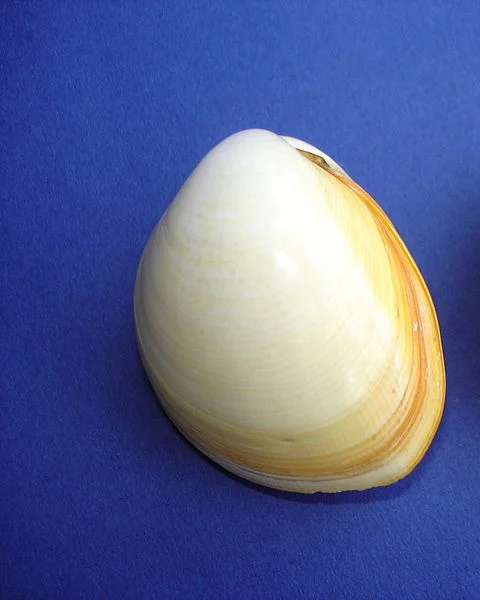
Egg Cockle
Laevicardium laevigatum · Cardiidae
★★★ Common 📏 1-1.5"
Small, smooth, glossy clamshell. White to cream.
🏝️ Sandy to muddy bottom🍽️ Plankton⏳ 5-7 years📍 All Gulf beaches
🔍 Collecting tip: Delicate and often found intact.
💡 Smooth surface unlike other cockles.
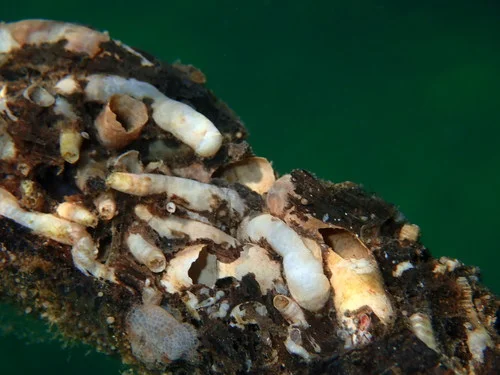
Flat Shipworm
Teredo navalis · Teredinidae
★★★ Common 📏 0.2–0.5" (shell only)
Tiny white shell at the boring end of a much larger worm-like animal. The shell itself is tiny and globe-shaped. Evidence seen as tunneled driftwood.
🏝️ Inside wood — pilings, driftwood, docks🍽️ Wood cellulose, digested with the help of symbiotic bacteria⏳ 1–2 years📍 Pilings and driftwood, all Gulf-side docks
🔍 Collecting tip: Check tunneled, honeycombed driftwood rather than looking for a loose shell.
💡 The tiny shell is just the boring tool at the head of a much larger worm-like body that can tunnel over a foot into submerged wood.
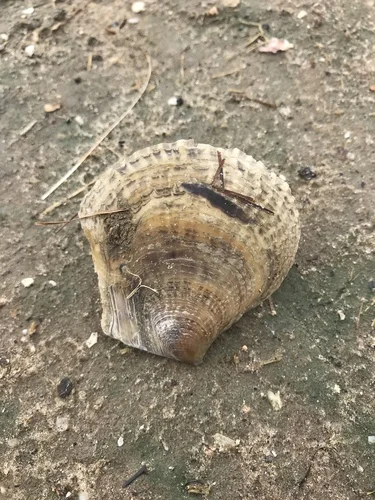
Flat Tree Oyster
Isognomon alatus · Isognomonidae
★★★ Very Common 📏 2–4"
Flat, irregular, dark purple-brown shell. Grows in clusters on mangrove roots. Very thin and flat. Interior is pearly.
🏝️ Mangrove roots, pilings, rocks, intertidal🍽️ Plankton (filter feeder)⏳ 3–5 years📍 Mangrove roots, Ten Thousand Islands & Rookery Bay
🔍 Collecting tip: Check exposed mangrove prop roots at low tide.
💡 Grows in dense clusters directly on mangrove prop roots, anchored by tough byssal threads rather than cementing like a true oyster.
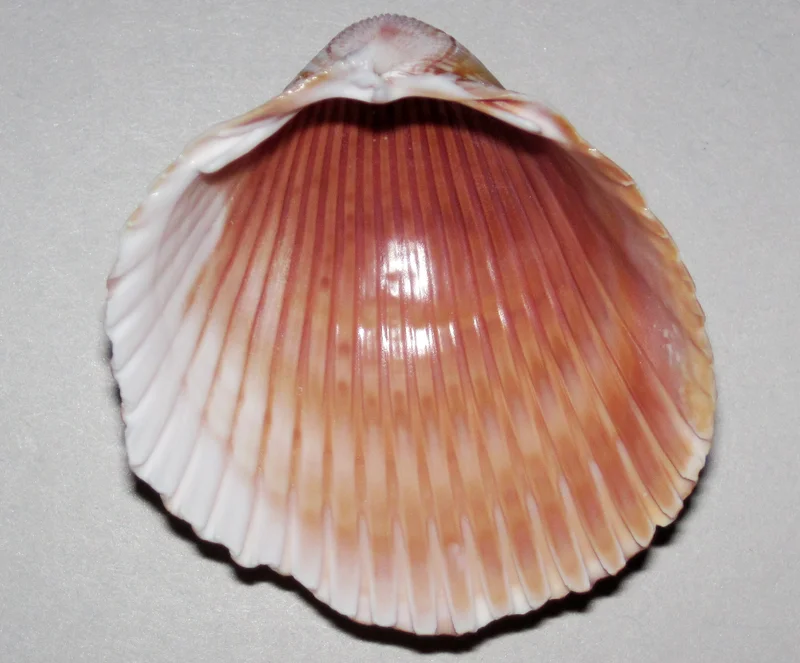
Giant Atlantic Cockle
Dinocardium robustum · Cardiidae
★★★ Common 📏 2-4"
Large, heavy, heart-shaped clamshell with bold ribs.
🏝️ Sandy to muddy bottom🍽️ Plankton⏳ 10-12 years📍 Fort Myers, Sanibel
🔍 Collecting tip: Heavy shells that often survive intact.
💡 Has thick, prominent radial ribs that form a heart shape.
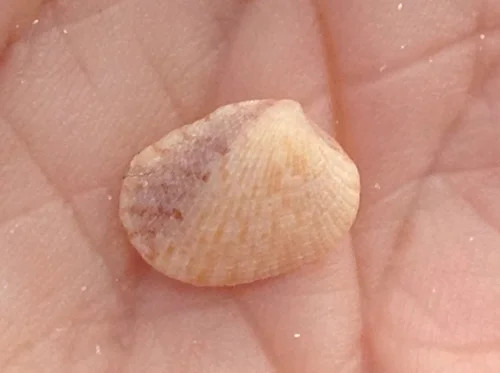
Gray Pygmy Venus
Chione grus · Veneridae
★★★ Common 📏 0.5–1"
Small, triangular, gray to white venus clam. Concentric ridges with fine radial ribs. Common in muddy sand areas.
🏝️ Sandy-mud bottoms, shallow waters🍽️ Plankton (filter feeder)⏳ 3–5 years📍 Muddy sand flats, all Gulf bays
🔍 Collecting tip: Sift muddy sand alongside other small venus clams.
💡 A small, muddy-bottom relative of the Cross-Barred Venus, sharing the same ribbed venus-clam sculpture on a much smaller scale.

Green Jackknife Clam
Solen viridis · Solenidae
★★★ Common 📏 1.5–2.5"
Narrow, straight, green-tinged clam. Both ends gape. Greenish periostracum. Fast burrower digs straight down in sand.
🏝️ Sandy-mud bottoms, shallow bays🍽️ Plankton (filter feeder)⏳ 2–4 years📍 Sandy-mud bays, Gulf-side flats
🔍 Collecting tip: Look for narrow, straight, greenish shells in muddy sand drift.
💡 Both ends of the shell stay open even when the animal is at rest, an adaptation for its rapid vertical burrowing lifestyle.
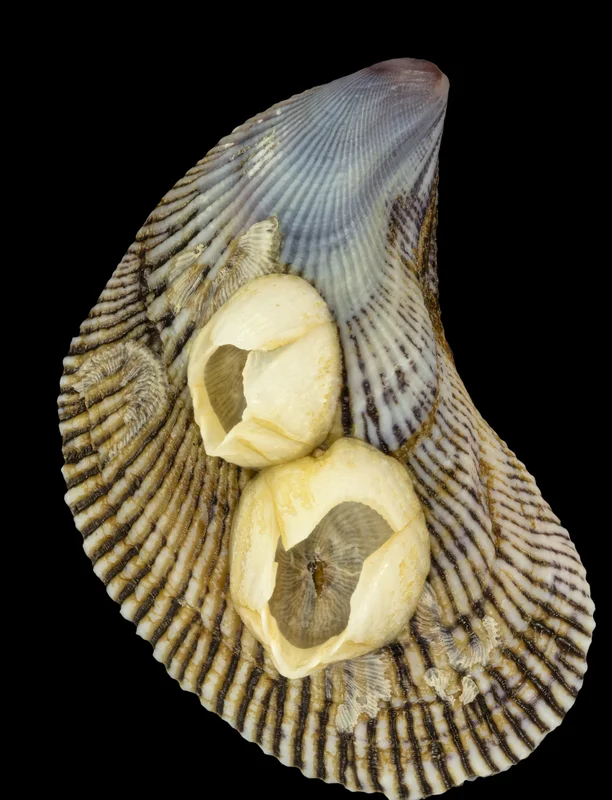
Hooked Mussel
Ischadium recurvum · Mytilidae
★★★ Very Common 📏 1–2"
Dark brown to black mussel with strongly curved or hooked shape. Radial ribs. Forms dense clusters on oyster reefs and pilings.
🏝️ Oyster reefs, pilings, rocks, hard substrates, intertidal🍽️ Plankton (filter feeder)⏳ 3–5 years📍 Oyster reefs & pilings, Naples Bay & Estero Bay
🔍 Collecting tip: Check oyster reefs and dock pilings at low tide for dense mussel clusters.
💡 Forms dense clusters on oyster reefs and pilings, anchored by strong byssal threads, and is one of the most abundant mussels in Gulf estuaries.
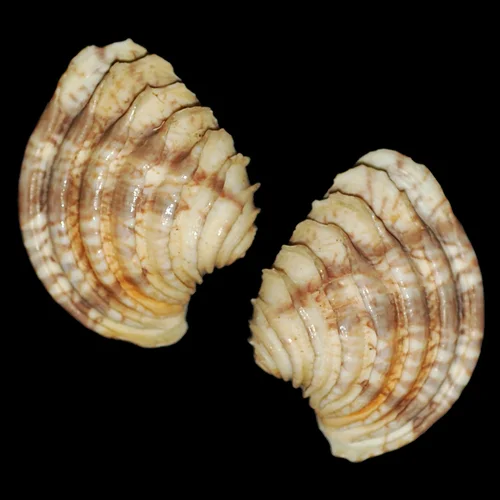
King Venus
Chione paphia · Veneridae
★★★ Common 📏 1–1.5"
Sturdy venus clam with thick concentric lamellae. Cream to tan. Similar to Cross-Barred Venus but with wider, more blade-like ridges.
🏝️ Sandy bottoms, shallow to moderate depths🍽️ Plankton (filter feeder)⏳ 4–6 years📍 Sandy flats, all SW Florida beaches
🔍 Collecting tip: Compare ridge thickness against Cross-Barred Venus to tell the two apart.
💡 Its wide, blade-like concentric ridges are heavier and more pronounced than those of the similar Cross-Barred Venus.
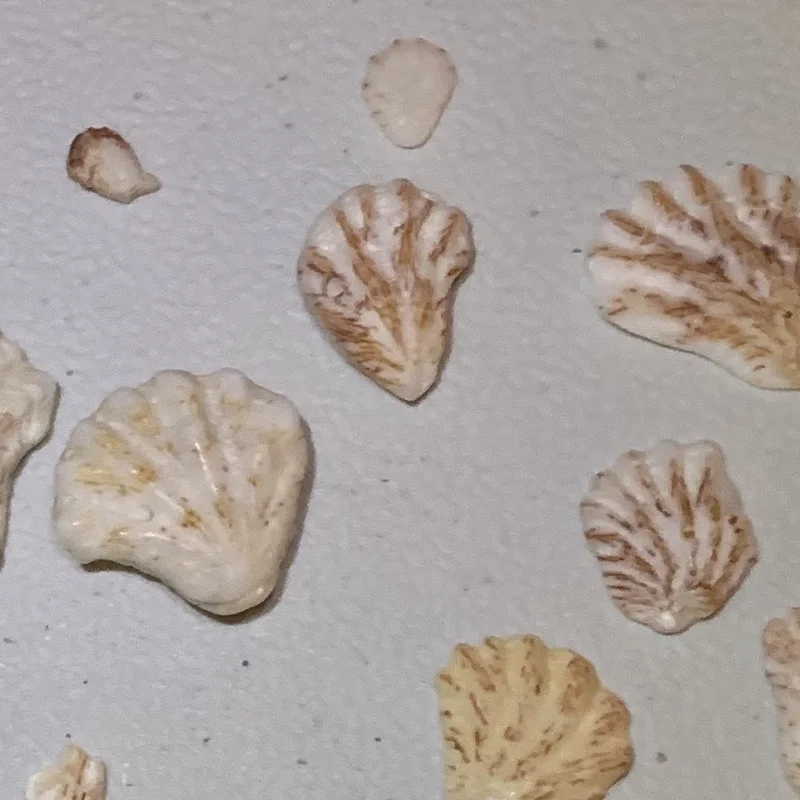
Kitten's Paw
Plicatula gibbosa · Plicatulidae
★★★ Common 📏 0.5-1"
Small, ribbed, irregular shell resembling a tiny cat's paw print.
🏝️ Attached to hard surfaces🍽️ Plankton⏳ 2-3 years📍 Caxambas Bay, Naples Bay
🔍 Collecting tip: Check jetty rocks and oyster clumps.
💡 Attaches to rocks and oyster reefs in clusters.

Lightning Venus
Pitar fulminatus · Veneridae
★★★ Common 📏 1–1.5"
Oval, smooth shell with brown lightning-bolt zigzag markings on a cream background. Smooth surface unlike the sculptured Chione venus clams.
🏝️ Sandy bottoms, shallow to moderate depths🍽️ Plankton (filter feeder)⏳ 4–6 years📍 Sandy flats, all SW Florida beaches
🔍 Collecting tip: Look for smooth (not ribbed) shells with lightning-bolt zigzag markings.
💡 Unlike most local venus clams, its surface is smooth rather than ribbed, letting its brown zigzag markings stand out clearly.

Lion's Paw
Nodipecten nodosus · Pectinidae
★★★ Uncommon 📏 3–6"
A bold ribbed scallop with large knobby ribs. Fresh specimens are deep red or orange.
🏝️ Deep offshore reefs 30–200 ft🍽️ Plankton (filter feeder)⏳ 5–10 years📍 Offshore Marco, Naples
🔍 Collecting tip: Check the high tide line after northeast storms.
💡 Deep-water scallop; its red color fades in sunlight.

Miniature Lucine
Lucina amiantus · Lucinidae
★★★ Common 📏 0.3–0.5"
Very small, round, white lucine with fine concentric growth lines. Found in shell drift among other micro-shells.
🏝️ Sandy bottoms, shallow waters🍽️ Filter feeding supplemented by bacterial symbionts⏳ 3–5 years📍 Sandy flats, all Gulf beaches
🔍 Collecting tip: Sift fine shell drift alongside other tiny round white bivalves.
💡 A miniature version of the same sulfur-bacteria partnership seen in its larger lucine relatives.
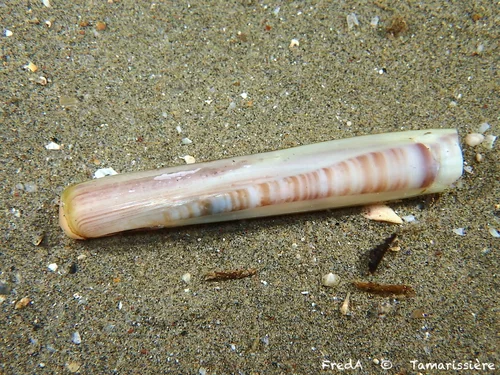
Minor Jackknife Clam
Ensis minor · Pharidae
★★★ Common 📏 2–4"
Long, narrow, slightly curved shell resembling a straight razor or jackknife. Green to brown periostracum over white shell. Rapid burrower.
🏝️ Sandy surf zone, shallow subtidal🍽️ Plankton (filter feeder)⏳ 3–5 years📍 Surf zone, all Gulf-side beaches
🔍 Collecting tip: Check the wrack line after storms for its straight-razor-shaped shell.
💡 An extremely fast burrower — in the water it can dig straight down out of sight in just a few seconds.
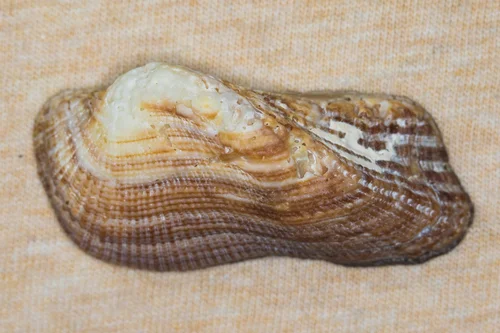
Mossy Ark
Arca imbricata · Arcidae
★★★ Common 📏 1–2"
Rectangular ark covered with a thick, hairy, dark brown periostracum that gives a 'mossy' appearance. Strongly ribbed.
🏝️ Rocks, coral, hard substrates, shallow waters🍽️ Plankton (filter feeder)⏳ 4–6 years📍 Rocky substrates, Gulf-side jetties & reefs
🔍 Collecting tip: Look for its rectangular, fuzzy-coated shell attached to rocks by byssal threads.
💡 Its thick, hairy, dark periostracum gives it a "mossy" look that helps camouflage it against algae-covered rocks.
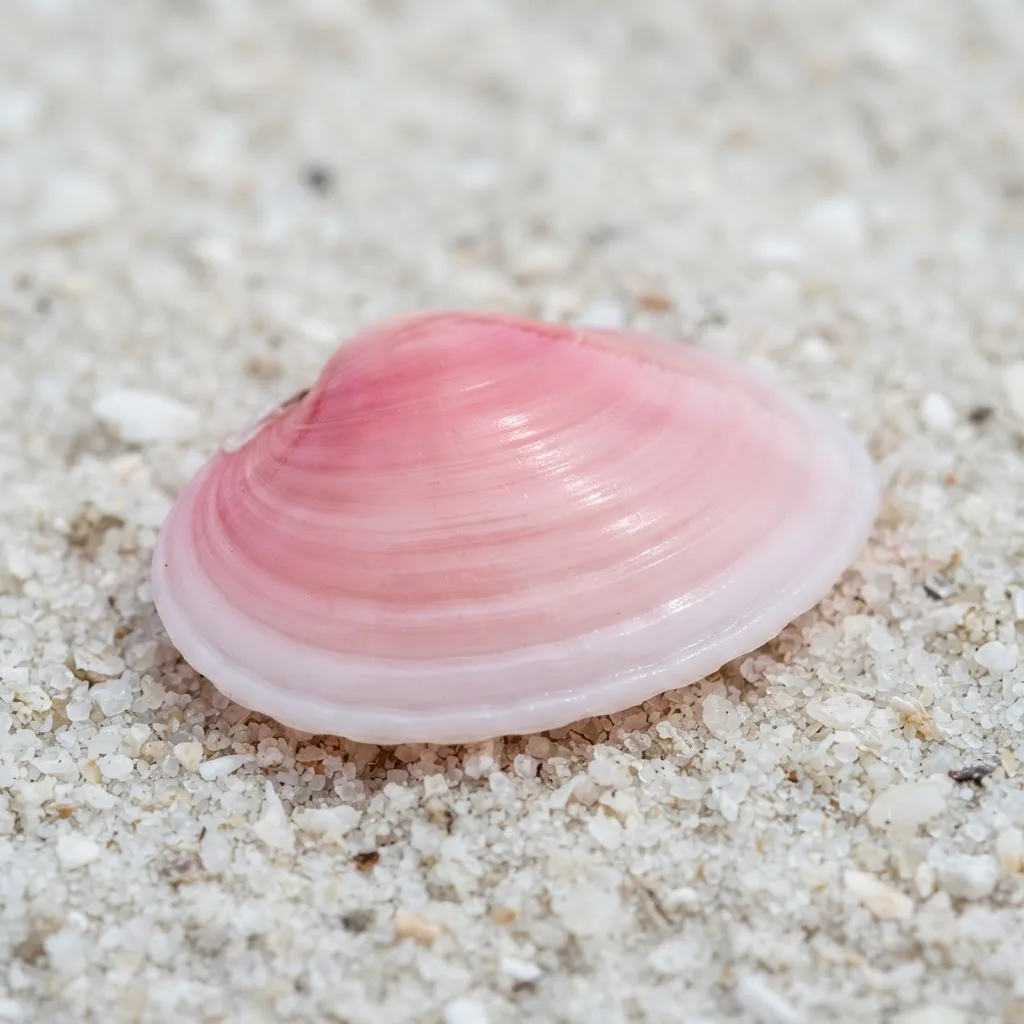
Pink Tellin
Eurytellina angulosa · Tellinidae
★★★ Uncommon 📏 1–2"
Smooth, thin, oval shell with a beautiful pink coloration. Some specimens are vivid pink, others are pale rose. One of the most colorful tellins.
🏝️ Sandy bottoms, shallow to moderate depths🍽️ Detritus (deposit feeder)⏳ 2–4 years📍 Sandy flats, all SW Florida beaches
🔍 Collecting tip: Check shell drift for its glossy pink coloring — it stands out among the more common white shells.
💡 One of the most colorful tellins on the Gulf coast, prized by collectors for its vivid pink coloring.
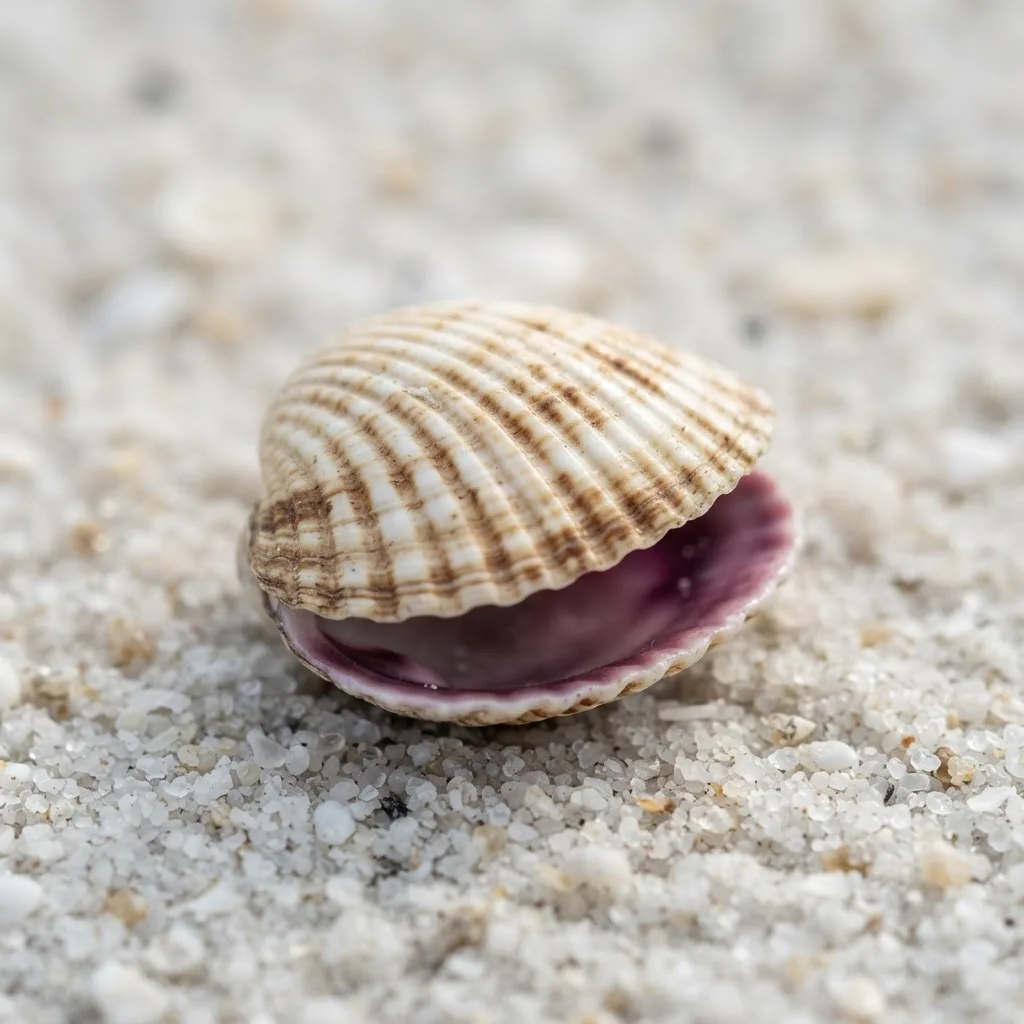
Purplish Semele
Semele purpurascens · Semelidae
★★★ Uncommon 📏 1–2"
Round shell with purplish tinge, especially on the interior. Cream exterior with brownish rays. Fine concentric sculpture.
🏝️ Sandy bottoms, moderate depths🍽️ Detritus and plankton⏳ 2–4 years📍 Sandy bottoms, Gulf-side flats
🔍 Collecting tip: Check the interior color of any unidentified small oval clam — purple staining points to this species.
💡 The purple interior tinge is its signature feature and the easiest way to separate it from the plain White Atlantic Semele.
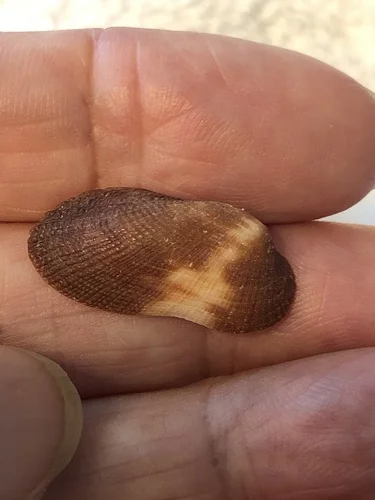
Red-Brown Ark
Barbatia cancellaria · Arcidae
★★★ Common 📏 1–2"
Small ark with reddish-brown hairy periostracum. Fine radial and concentric ribs create a cancellate pattern. Found in protected rocky crevices.
🏝️ Rocky areas, coral rubble, crevices🍽️ Plankton (filter feeder)⏳ 3–5 years📍 Rocky crevices, coral rubble, Gulf-side jetties
🔍 Collecting tip: Check protected crevices alongside White Miniature Ark.
💡 Its hairy reddish-brown periostracum crosses with fine ribs to create a distinctive cancellate, or crosshatched, texture.
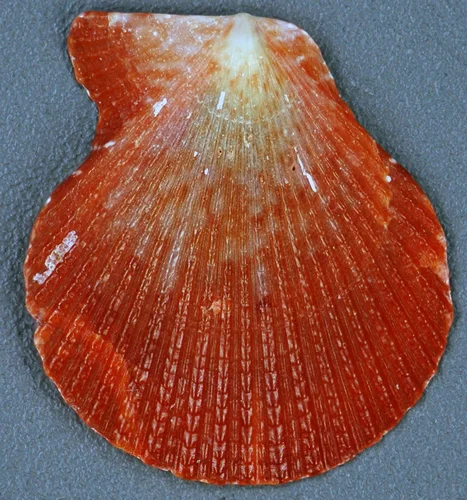
Sentis Scallop
Caribachlamys sentis · Pectinidae
★★★ Uncommon 📏 1–2"
Small, colorful scallop often bright red, orange, or purple. Strong ribs with spiny scales. Attaches to hard surfaces.
🏝️ Rocky areas, under ledges, moderate depths🍽️ Plankton (filter feeder)⏳ 1–2 years📍 Rocky ledges, offshore Sanibel & Captiva
🔍 Collecting tip: Check rocky ledge habitat rather than open sand — it attaches to hard surfaces.
💡 One of the most vividly colored small scallops in the Gulf, ranging from bright red to purple depending on the individual.

Sunray Venus
Macrocallista nimbosa · Veneridae
★★★ Common 📏 2-4"
Glossy clamshell with radial ribs and beautiful pink to purple rays.
🏝️ Sandy bottom🍽️ Plankton⏳ 8-10 years📍 All Gulf beaches
🔍 Collecting tip: Found in shell piles after storms.
💡 Named for the rays of color radiating from the hinge.
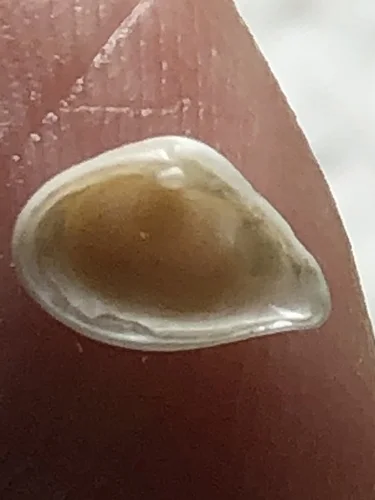
Swift's Corbula
Caryocorbula swiftiana · Corbulidae
★★★ Common 📏 0.2–0.5"
Tiny, inequivalve bivalve similar to Dietz's Corbula. White. Right valve overlaps left. One of many small corbulas in fine shell drift.
🏝️ Sandy-mud bottoms, shallow to moderate depths🍽️ Plankton and detritus⏳ 1–2 years📍 Sandy-mud bays, Gulf-side flats
🔍 Collecting tip: Sift fine sediment alongside Dietz's Corbula.
💡 Nearly identical to Dietz's Corbula and best told apart by close comparison of valve shape under magnification.
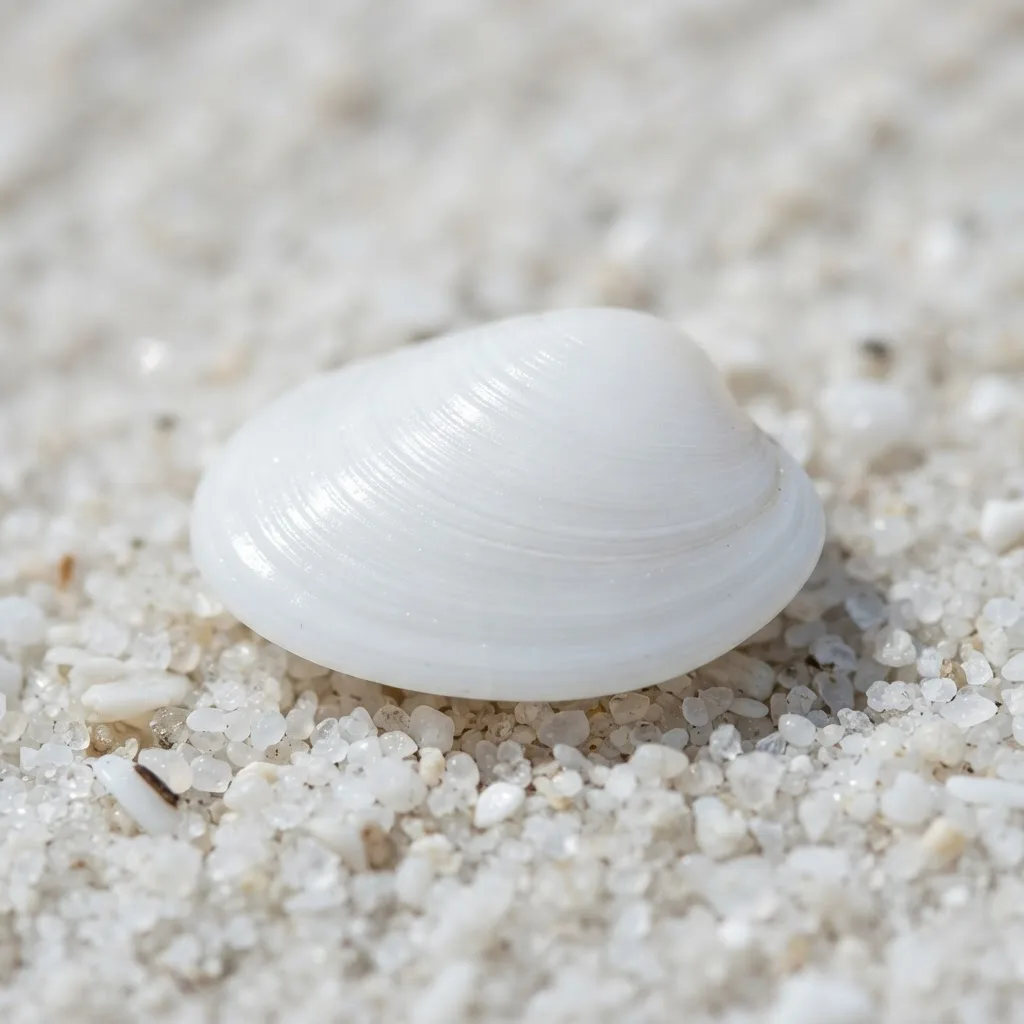
Tampa Tellin
Tellina tampaensis · Tellinidae
★★★ Common 📏 0.5–1"
Small, white, smooth tellin. Named for Tampa Bay. Fine concentric sculpture. Often found in shell drift along with other small bivalves.
🏝️ Sandy bottoms, shallow bays🍽️ Detritus (deposit feeder)⏳ 2–3 years📍 Sandy bays, all SW Florida
🔍 Collecting tip: Sift shell drift alongside other small tellins.
💡 Named for Tampa Bay, but ranges throughout the Gulf coast's sand flats including SW Florida.
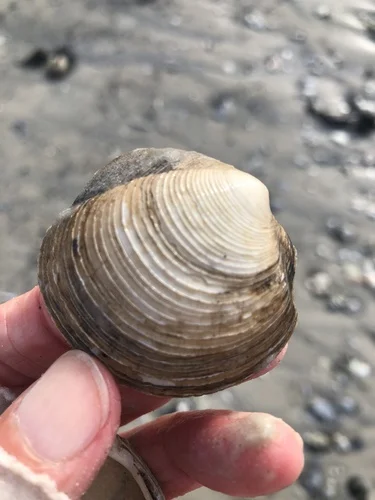
Thick Lucine
Phacoides pectinatus · Lucinidae
★★★ Common 📏 1.5–2.5"
Round, white, thick-shelled lucine with distinct concentric ridges. Heavier than Pennsylvania Lucine. White to chalky. Common in seagrass areas.
🏝️ Sandy bottoms near seagrass, shallow to moderate depths🍽️ Filter feeding supplemented by sulfur-oxidizing bacterial symbionts⏳ 8–12 years📍 Seagrass sand flats, Gulf-side bays
🔍 Collecting tip: Check sandy patches within seagrass beds.
💡 Lucines like this one dig a mucus-lined feeding tube to the sand surface and can live for many years in the same burrow.

Three-Lined Pandora
Pandora trilineata · Pandoridae
★★★ Uncommon 📏 0.5–1"
Flat, pearly-white shell with three faint internal ridges. Very thin and delicate. Right valve is flat; left valve is slightly convex.
🏝️ Sandy bottoms, moderate depths🍽️ Plankton (filter feeder)⏳ 2–4 years📍 Sandy flats, Gulf-side bays
🔍 Collecting tip: Handle gently — its thin shell breaks easily even when dry.
💡 Its flat, pearly-white shell is so thin it's almost translucent, with one valve notably flatter than the other.

Three-Toothed Cardita
Pleuromeris tridentata · Carditidae
★★★ Common 📏 0.3–0.5"
Tiny, sturdy bivalve with strong ribs. White to brownish. Three cardinal teeth visible. Very small but solidly built.
🏝️ Sandy-rubble bottoms, shallow to moderate depths🍽️ Plankton (filter feeder)⏳ 2–4 years📍 Rubble bottoms, Gulf-side flats
🔍 Collecting tip: Sift rubble-rich sand alongside other tiny bivalves.
💡 Despite its tiny size it's a solidly built little clam, with three distinct hinge teeth that give it its common name.
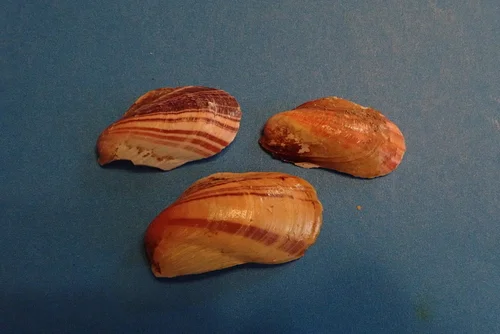
Tulip Mussel
Modiolus americanus · Mytilidae
★★★ Common 📏 2–4"
Thin, elongated mussel. Brown periostracum over a purplish-brown shell. Found partially buried in sediment, often in seagrass beds.
🏝️ Sandy-mud bottoms, embedded in seagrass root mats🍽️ Plankton (filter feeder)⏳ 3–6 years📍 Seagrass beds, Gulf-side flats
🔍 Collecting tip: Check seagrass wrack after storms rather than rocky habitat.
💡 Unlike the reef-clustering Hooked Mussel, it lives partly buried in seagrass root mats rather than attached to hard surfaces.
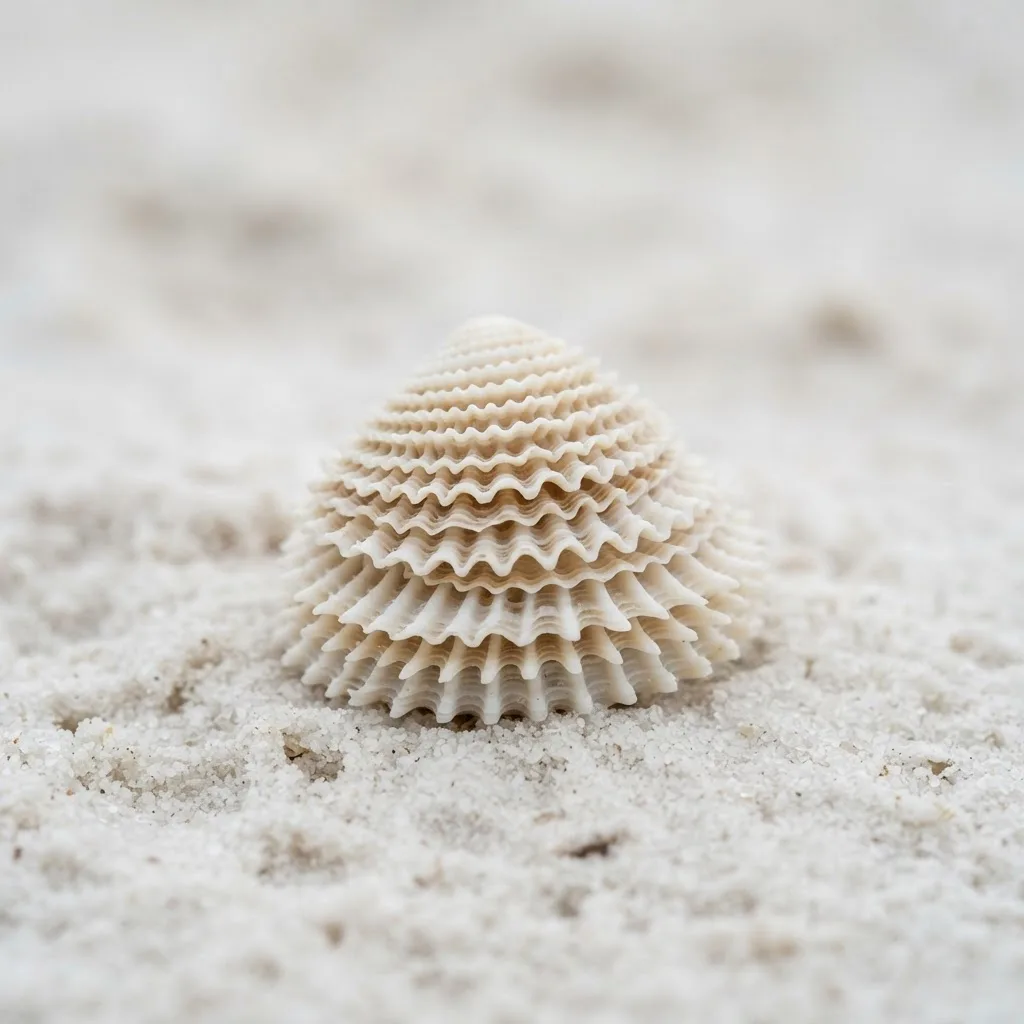
Wedding Cake Venus
Callanaitis virginianum · Veneridae
★★★ Uncommon 📏 0.5–1"
Small, delicate shell with thin, blade-like concentric lamellae stacked like layers of a wedding cake. White to cream.
🏝️ Sandy bottoms, shallow to moderate depths🍽️ Plankton (filter feeder)⏳ 3–5 years📍 Sandy flats, all SW Florida beaches
🔍 Collecting tip: Handle carefully — the thin lamellae chip easily.
💡 Its thin, stacked, blade-like ridges resemble the tiered layers of a wedding cake — one of the most delicately sculptured shells in this guide.
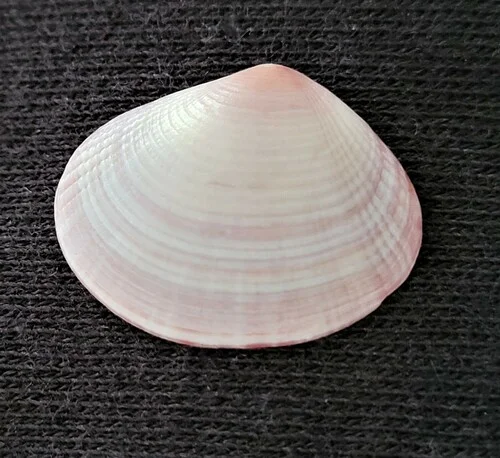
White Atlantic Semele
Semele bellastriata · Semelidae
★★★ Common 📏 0.5–1"
Small, round, white shell with fine concentric and radial sculpture creating a delicate pattern. Interior sometimes tinged purple or orange.
🏝️ Sandy bottoms, shallow to moderate depths🍽️ Detritus and plankton (deposit/filter feeder)⏳ 2–3 years📍 Sandy flats, all Gulf beaches
🔍 Collecting tip: Check fine shell drift alongside other small white bivalves.
💡 The fine crisscross of concentric and radial sculpture creates a delicate lattice pattern unique among small local bivalves.
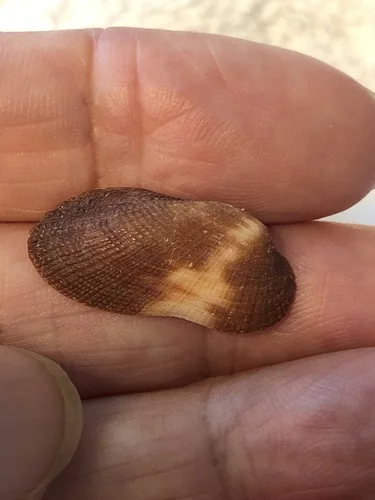
White Miniature Ark
Barbatia domingensis · Arcidae
★★★ Common 📏 0.5–1"
Small, white, elongated ark with fine radial ribs. Clean white when bleached. Found in crevices and under rocks.
🏝️ Rocky areas, under rubble, crevices, shallow waters🍽️ Plankton (filter feeder)⏳ 3–5 years📍 Rocky crevices, Sanibel & Naples jetties
🔍 Collecting tip: Check crevices and the undersides of rubble at low tide.
💡 Anchors itself in rock crevices with tough byssal threads rather than burrowing like most clams.
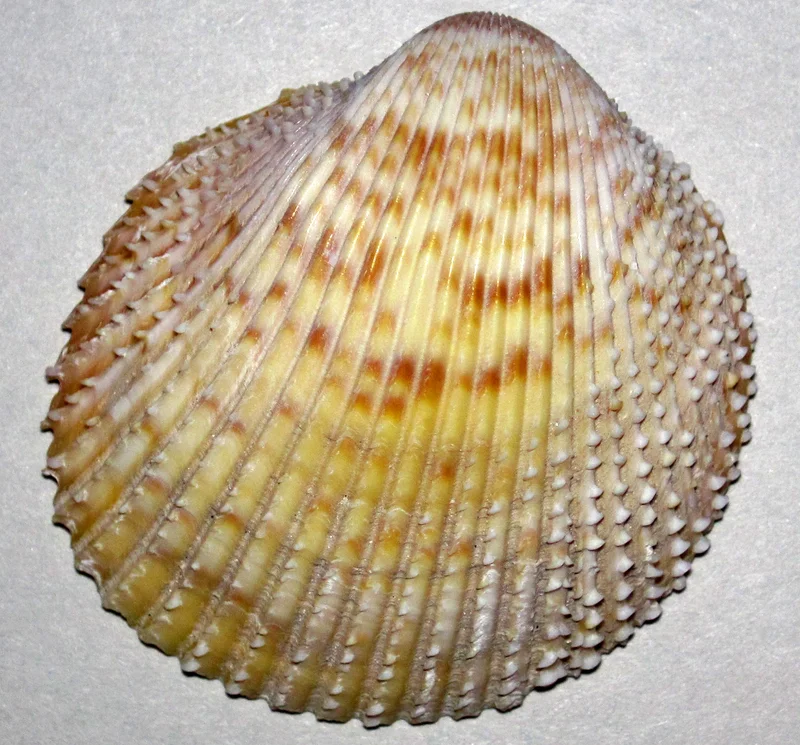
Yellow Cockle
Trachycardium muricatum · Cardiidae
★★★ Common 📏 1.5-3"
Heart-shaped shell with sharp, spiny radial ribs.
🏝️ Sandy bottom🍽️ Plankton⏳ 8-10 years📍 Sanibel, Captiva
🔍 Collecting tip: The spiny ribs make it distinctive.
💡 Has spiny ridges instead of simple ribs.

Zigzag Scallop
Euvola ziczac · Pectinidae
★★★ Uncommon 📏 2–4"
Large, flat scallop with distinctive zigzag or wavy concentric color bands. Orange, brown, and cream. Fewer ribs than Calico Scallop.
🏝️ Sandy bottoms, moderate depths🍽️ Plankton (filter feeder)⏳ 2–3 years📍 Sandy Gulf flats, offshore Naples & Marco Island
🔍 Collecting tip: Check shell-hash drift after storms for its distinctive wavy color bands.
💡 Like other scallops it can swim short distances by rapidly clapping its two valves together, jetting water out to escape predators.
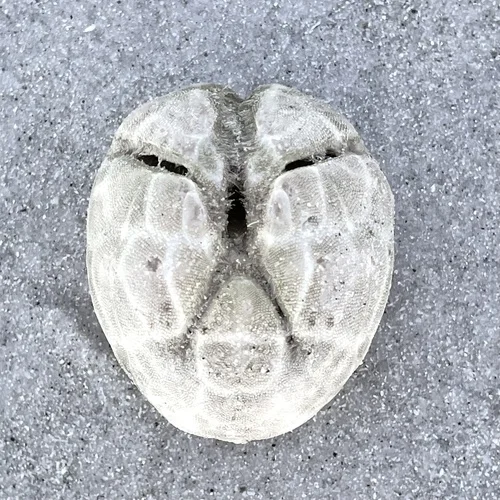
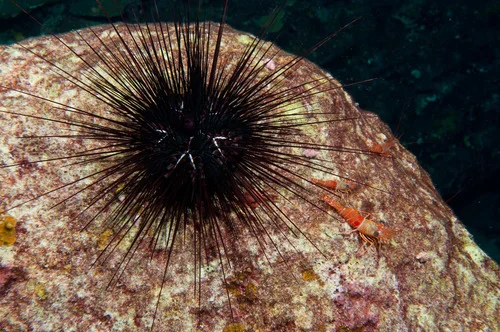
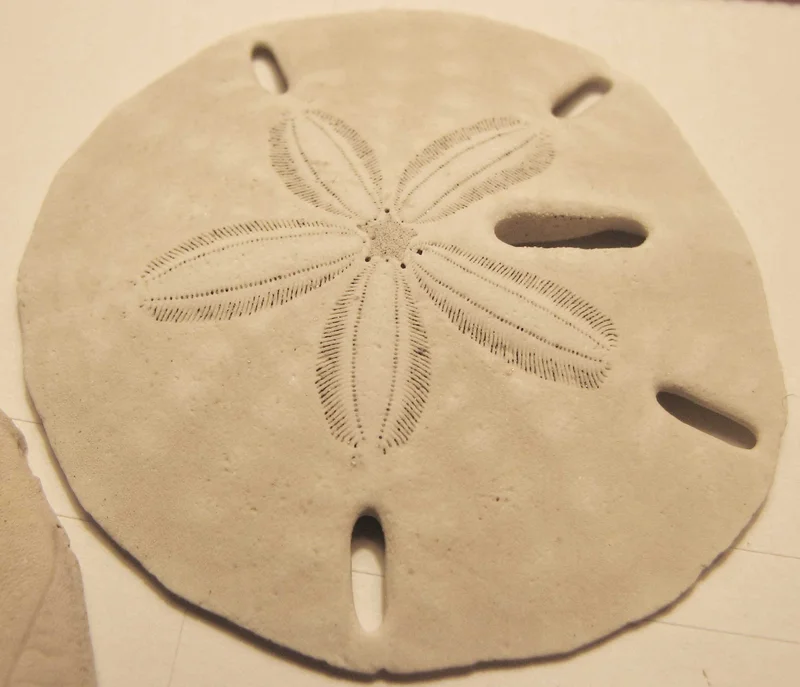
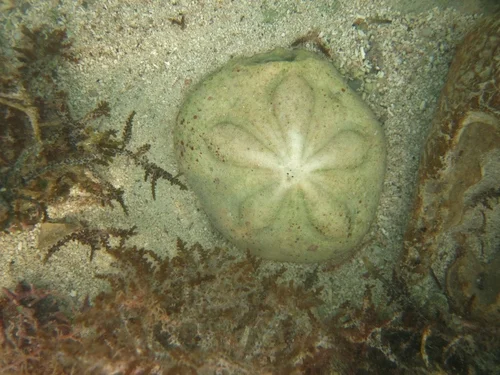
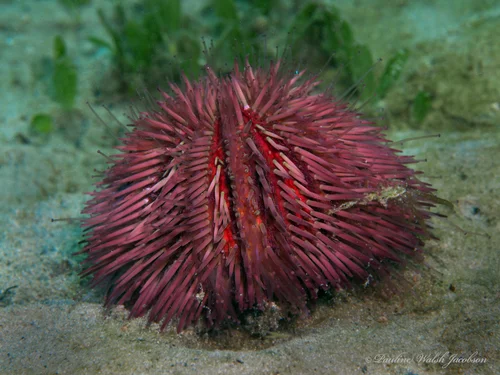
Not true seashells but treasured finds — sand dollars, urchins and their kin.
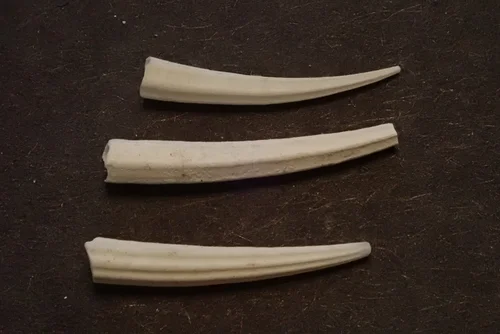
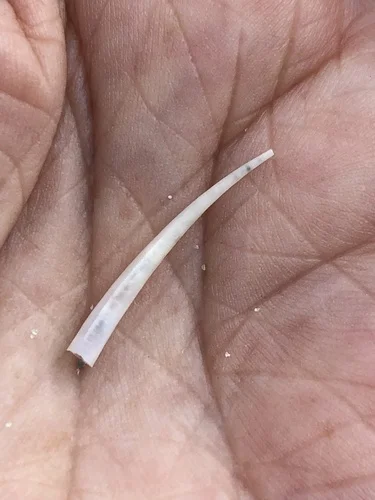
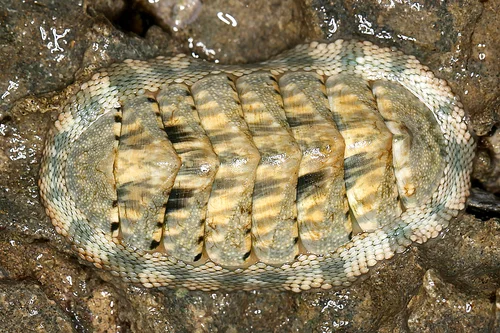
The oddballs: armored chitons and hollow tusk-shaped scaphopods.